
Get In-Demand Finance Certifications
Understand the six competitive forces
The Competitive Forces Model is an important tool used in strategic analysis to analyze the competitiveness in an industry. The model is more commonly referred to as the Porter’s Five Forces Model, which includes the following five forces: intensity of rivalry, threat of potential new entrants, bargaining power of buyers, bargaining power of suppliers, and threat of substitute goods and/or services.
In our competitive forces model, we include a sixth force, the power of complementary goods and/or services providers. The model helps a company understand the risks in the industry it is operating in and decide how it wants to execute its strategies in response to competition.
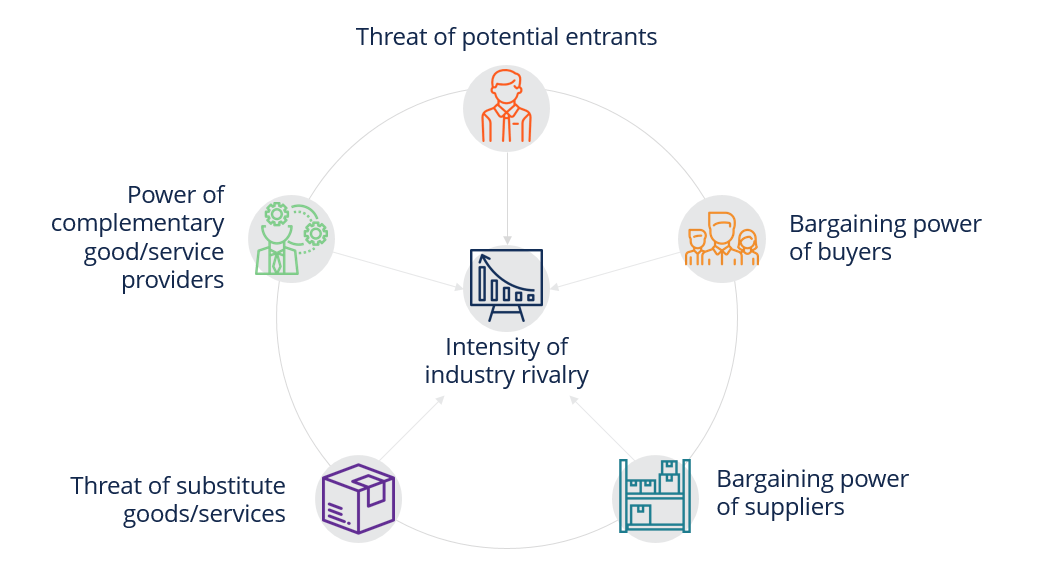
There are multiple factors that can impact the intensity of rivalry within an industry.
The threat of potential entrants is impacted by things such as:
The bargaining power of buyers is high when:
Buyers are price-sensitive when:
The bargaining power of suppliers is high when:
Purchasers’ price elasticity is high when:
Companies are likely to experience a high threat of substitute goods/services when:
Complementary goods or services can add value to the existing products in an industry. However, when complements have unattractive features or do not provide any value to consumers, they can actually become an issue for the industry by slowing growth and limiting profitability.
When developing strategies for a business, decision-makers should consider how they can potentially encourage complement providers to integrate and become a part of the business. Successful integration with complement providers is likely to expand market opportunities and bring profit-enhancing benefits to the business.
Thank you for reading CFI’s guide to the Competitive Forces Model. Additional relevant CFI resources include:


