
Get In-Demand Finance Certifications
Are you exploring your finance career path but feeling overwhelmed by the sheer number of roles and opportunities? From corporate finance teams to the fast-paced world of investment banking, the finance profession offers a variety of rewarding career paths.
To help you navigate, the CFI Career Map simplifies finance career paths into four key domains:
This article breaks down the four domains, the skills you’ll need to succeed, and how to choose the best fit for your interests and goals.
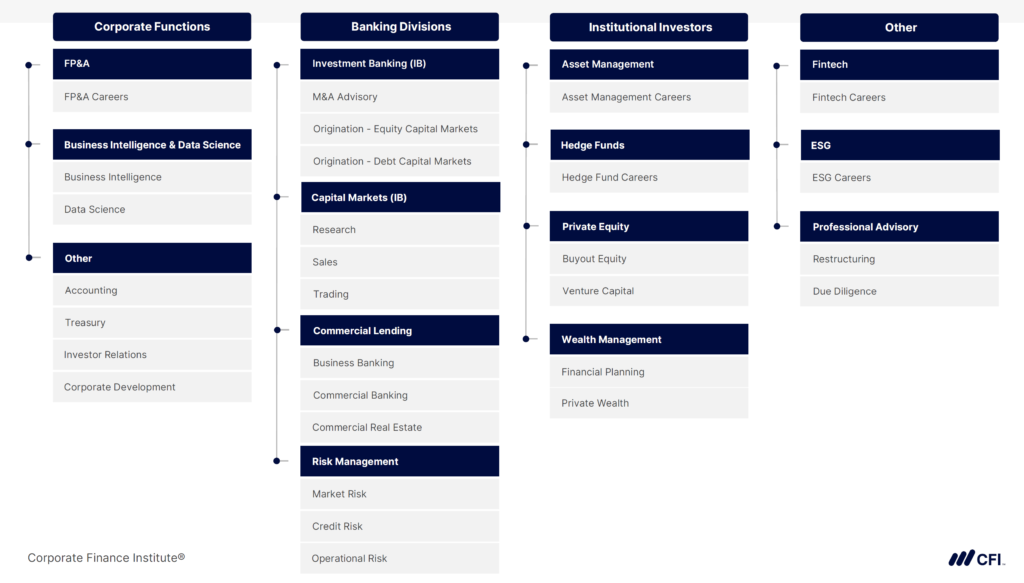
The CFI Career Map is a comprehensive tool designed to outline the major finance career paths and how they interconnect. By understanding the core domains, you’ll gain a clearer picture of where each role fits into the broader finance ecosystem.
Before we dive into the four career domains, here’s a brief overview of how to use this interactive Career Map.
To begin exploring career paths, scan the map for high-level summaries of each finance domain, from FP&A to Investment Banking and Private Equity. Click on a domain to learn more about it.
For careers that interest you, click on the specific career path. You will get a deeper look at what it takes to succeed, how new recruits break into the industry, job qualifications for the role, and more resources to guide your career journey.
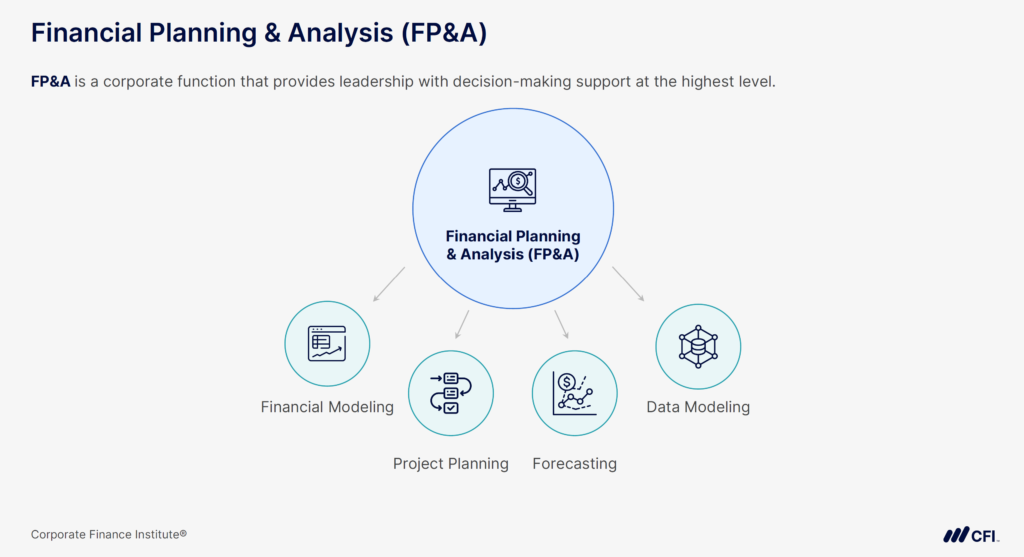
Corporate finance roles focus on managing the financial health and strategy of a single organization. You might find yourself working for companies like Tesla, Boeing, or Whole Foods, where large finance teams oversee budgeting, forecasting, variance analysis, and scenario analysis.
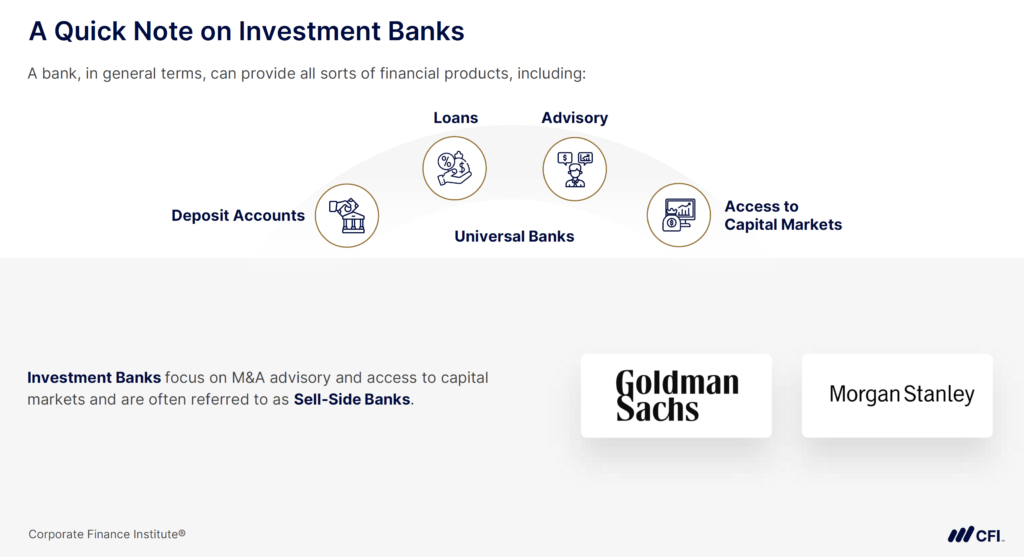
Banking careers offer a dynamic and impactful environment, with opportunities to specialize in a range of financial services. Careers are divided into two main banking segments:
Commercial Banking
Commercial banking professionals work directly with businesses to provide loans, credit facilities, and other financial products. For example, a commercial banker might help a company secure funding for expansion or manage its cash flow.
Investment Banking
Careers in investment banking involve providing advisory services to assist corporations with large transactions, such as mergers and acquisitions (M&A), initial public offerings (IPOs), and capital raising. These roles often involve intense financial modeling and valuation work.
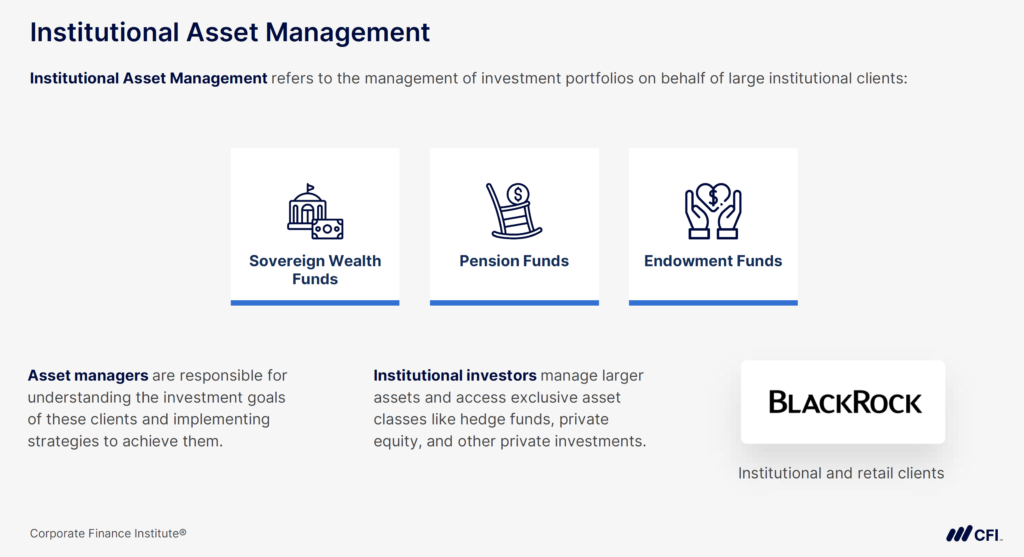
Institutional investors manage large sums of money on behalf of clients like pension funds, sovereign wealth funds, and endowments. These organizations are critical players in the financial markets, driving investment decisions that shape industries.
Regardless of the role, there are a few technical and non-technical skills that stand out as essential for success in the finance profession:
Building robust financial models is at the heart of most finance roles. Whether you’re in FP&A or investment banking, you’ll need to know how to forecast financial performance, evaluate scenarios, and provide actionable insights. Tools like Excel and Power BI are indispensable here.
Understanding how to perform valuation to determine the worth of a company, asset, or project is critical. Investment bankers rely on valuation techniques like discounted cash flow (DCF) analysis, while private equity professionals assess acquisition opportunities using similar methods.
With the growing importance of data-driven decision-making, skills in coding and automation tools such as Python, SQL, and Power BI are highly valuable. These are particularly emphasized in business intelligence and trading roles, where efficiency and data manipulation are key.
Finance professionals often distill complex financial data into digestible recommendations for stakeholders. Whether presenting to senior leadership or advising clients, your ability to communicate clearly and persuasively will set you apart.
The dynamic nature of finance means encountering new challenges regularly. Being able to analyze problems quickly and adapt to changing circumstances is crucial, especially in fast-paced roles like trading or hedge fund management.
Precision is critical in finance, especially in roles like investment banking, FP&A, and credit risk analysis. A keen eye for detail helps ensure accuracy in financial models, reports, and transactions.
In roles like private equity and asset management, long-term planning and strategic decision-making are essential. Professionals in these areas evaluate markets and opportunities to drive sustained growth and returns.
Building strong client relationships is crucial in commercial banking, wealth management, and client-facing roles in investment banking. Effective communication and trust-building skills are vital for success.
With so many options, how do you decide which finance career path suits you best? Here are some tips:
Are you drawn to working within a single company, influencing strategic decisions from the inside? Corporate roles like FP&A might be a great fit. Do you thrive in high-pressure environments with constant problem-solving? Investment banking or trading could suit your personality.
Consider the skills you excel in. If you’re a natural relationship builder, a career in commercial banking or wealth management might appeal to you. If you have a knack for analysis, roles like equity research or asset management could be more fulfilling.
Internships and entry-level roles offer invaluable exposure to different career paths. Use these opportunities to test out various roles and identify where you feel most energized and capable.
Take advantage of career resources like the CFI Career Map, online courses, and mentorship programs to gain deeper insights into your chosen field. For example, CFI’s Careers in Finance course provides an in-depth look at finance roles and skills to help you make informed decisions.
No matter where you’re starting, finance professions offer diverse and rewarding opportunities. By understanding the roles, mastering the necessary skills, and aligning your career with your strengths and interests, you can forge a path toward long-term success.
Ready to explore your options further? CFI’s Careers in Finance course guides you through the complex world of finance careers. With expert insights and industry perspectives, this course will empower you to chart your own finance career path with confidence and clarity.
Enroll in Careers in Finance today and start mapping your future!
How to Choose the Right Career Path in Finance for Your Skills
Top Professional Finance Certifications


