Get In-Demand Finance Certifications
Setting an initially low price to attract customers and quickly gain market share
Penetration pricing is a pricing strategy that is used to quickly gain market share by setting an initially low price to entice customers to purchase. This pricing strategy is generally used by new entrants into a market. An extreme form of penetration pricing is called predatory pricing.

It is common for a new entrant to use a penetration pricing strategy to quickly obtain a substantial amount of market share. Price is one of the easiest ways to differentiate new entrants from existing market players. The overarching goal of this pricing strategy is to:
Situations where penetration pricing works effectively:
A current small player in the marketplace where laundry detergent sells at around $15. Company A is an international company with significant excess production capacity and can therefore produce laundry detergents at a significantly lower cost.
Company A decides to enter the market, employ a penetration pricing strategy, and sell laundry detergent at a sale price of $6.05. The company’s cost to produce laundry detergent is $6.
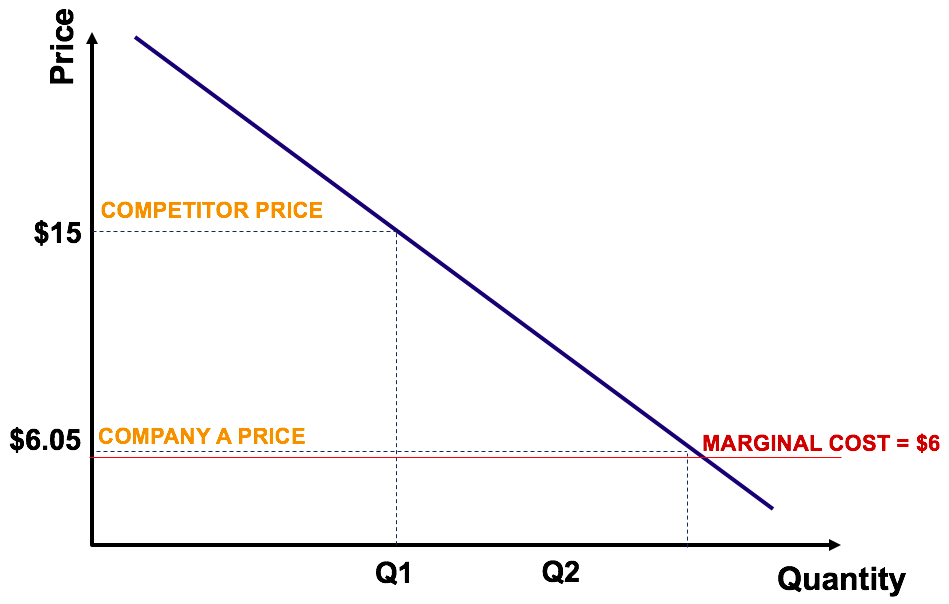
With a marginal cost of $6 and a sale price of $6.05, Company A is making nominal profits per sale. However, the company is comfortable with this decision as its overarching goal is to switch customers over, capture as much market share as possible, and utilize economies of scale with their high production capacity.
Company A believes that its competitor will not be able to sustain itself in the long-term and will eventually exit the market. When the competitor exits the marketplace, Company A will become the only seller of laundry detergent and therefore be able to establish a monopoly over the market and raise prices to a level that will provide a high profit margin.
Connect what you just learned to a clear career path with CFI’s role‑based courses and certification programs.
Thank you for reading CFI’s guide to Penetration Pricing. To keep learning and advancing your career, the additional CFI resources below will be useful: