Get Certified for Financial Modeling (FMVA)®
Gain in-demand industry knowledge and hands-on practice that will help you stand out from the competition and become a world-class financial analyst.
The assessment of the financial techniques used by a specific company
Managerial finance is concerned more with the assessment of financial techniques versus the financial techniques themselves. It differs from the technical approach, which essentially only concerns itself with measurement and whether money’s been assigned to the correct categories.
The managerial approach aims to determine the significance of data, figures, and numbers. Managerial finance considers how financial techniques can be improved – where changes can be made in order to help prevent losses and improve the bottom line.

Managerial finance is somewhat a combination of both corporate finance and managerial accounting. It is an interdisciplinary approach. It assists in putting business strategies into place and monitoring their effectiveness in relation to accomplishing the objectives of a company. When finances are properly managed, value is created and a company’s scarce resources are properly allocated.
In order to better understand what managerial finance really means, let’s look at some examples of what it might look like in practice. An individual using the managerial approach might:
Both managerial finance and corporate finance are combined under the umbrella of managerial accounting; however, the two serve different functions.
Managerial finance carefully analyzes companies by department and products, versus looking at the company as a whole. Top-level managers need to measure performance. Managerial finance helps them do so by looking at specific departments, determining their efficiency and effectiveness in helping a company boost returns. It helps the senior-level managers make decisions about how a company is organized and if its organization is working to maximally benefit the company.
Corporate finance, on the other hand, examines all the tools being utilized to develop a company’s financial statements, analyzing the data in order to determine if the company – as a whole – is successful or failing. Those who employ the corporate finance approach also look at capital raising, risk management, and the valuation of a company’s assets.
CFI offers the Financial Modeling & Valuation Analyst (FMVA)™ certification program for those looking to take their careers to the next level. To keep learning and developing your knowledge base, please explore the additional relevant CFI resources below:
Below is a break down of subject weightings in the FMVA® financial analyst program. As you can see there is a heavy focus on financial modeling, finance, Excel, business valuation, budgeting/forecasting, PowerPoint presentations, accounting and business strategy.
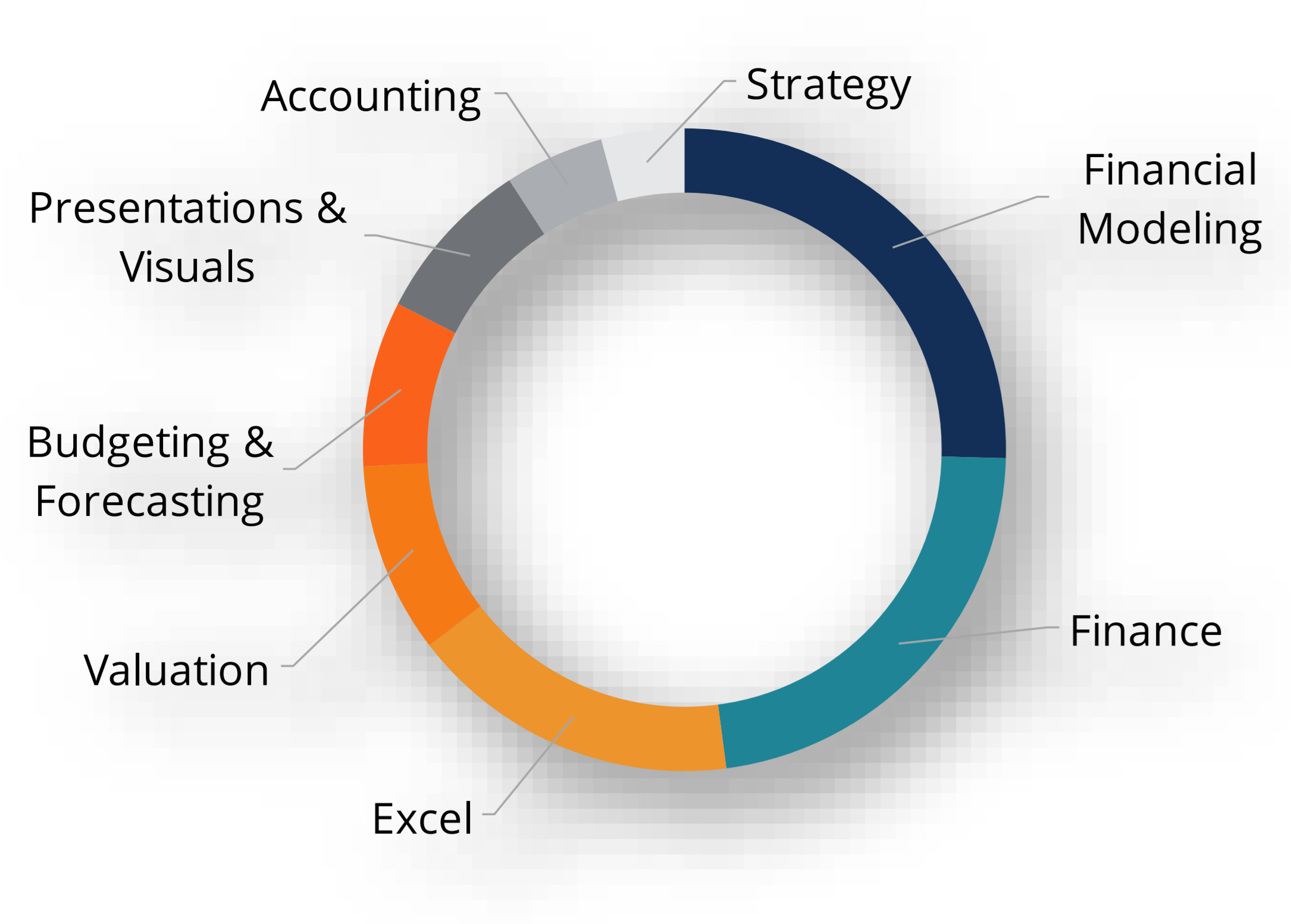
A well rounded financial analyst possesses all of the above skills!
CFI is the global institution behind the financial modeling and valuation analyst FMVA® Designation. CFI is on a mission to enable anyone to be a great financial analyst and have a great career path. In order to help you advance your career, CFI has compiled many resources to assist you along the path.
In order to become a great financial analyst, here are some more questions and answers for you to discover:


