Get Certified for Financial Modeling (FMVA)®
Gain in-demand industry knowledge and hands-on practice that will help you stand out from the competition and become a world-class financial analyst.
The risk related to a company’s cost structure
Operating risk is the risk related to a company’s cost structure. More specifically, it is the risk the company faces due to the level of fixed costs in its operations. Together with sales risk, operating risk is one of the two components of business risk.

Business risk is the risk related to a company’s operating income. We can break up business risk into two components:
The higher the level of fixed costs in a company’s operations, the higher the operating risk. Unlike variable costs, which depend on the level of production, fixed costs don’t change depending on the revenue generated.
The measurement of operating risk can be done through the application of the concept of elasticity. More specifically, we can use indicators such as the degree of operating leverage (DOL), which is a very popular indicator of operating risk.
The degree of operating leverage measures the sensitivity of operating income to the variations in units sold. It is measured as the percentage change in operating income divided by the percentage change in units sold:

For example, if we calculated the degree operating leverage for Company A and found a value of 3, it means that Company A would experience a 3% increase in operating income for every 1% of growth in units sold.
The degree of operating leverage is not a static measure, but its value changes based on the level of output.
Wonder Cars LLC manufactures components for the automotive industry. Being an industrial company with significant needs in terms of productive capacity, its cost structure is characterized by high fixed costs. More specifically, in the current conditions, Wonder Cars:
Assuming that the company is now producing and selling 10,000 pieces per year, let us calculate the degree of operating leverage when the company increases its production by 5%.
We can now calculate the degree of operating leverage:
Therefore, the DOL is 1.5.
Let’s assume that Wonder Cars recently found an effective strategy to outsource part of its production to a supplier that would be paid on a per-unit basis. In other words, the company will be able to dismantle part of its productive capacity, reducing fixed costs while increasing variable costs.
More specifically, Wonder Cars will be able to produce 10,000 pieces per year with the following cost structure:
For the production of 10,000 pieces, Wonder Cars bears total costs of $5,700,000. If the average selling price is unchanged, the company will be generating $2,800,000 in operating profit.
If the company increased its production and sales by 5% to 10,500 units per year, Wonder Cars would:
In such conditions, Wonder Cars is surely earning less money, but the DOL, and therefore, the operating risk, becomes lower. It is because:
Therefore, the degree of operating leverage goes down to 1.428, which is lower than 1.5 in the first example.
In other words, Wonder Cars’ operating income becomes less sensitive to changes in sales, which means that the company’s operating risk goes down also.
A company should neither generally minimize the level of operating risk nor maximize it. The right level of operating risk depends on several factors, such as:
CFI offers the Financial Modeling & Valuation Analyst (FMVA®) certification program for those looking to take their careers to the next level. To keep learning and developing your knowledge base, please explore the additional relevant resources below:
Below is a break down of subject weightings in the FMVA® financial analyst program. As you can see there is a heavy focus on financial modeling, finance, Excel, business valuation, budgeting/forecasting, PowerPoint presentations, accounting and business strategy.
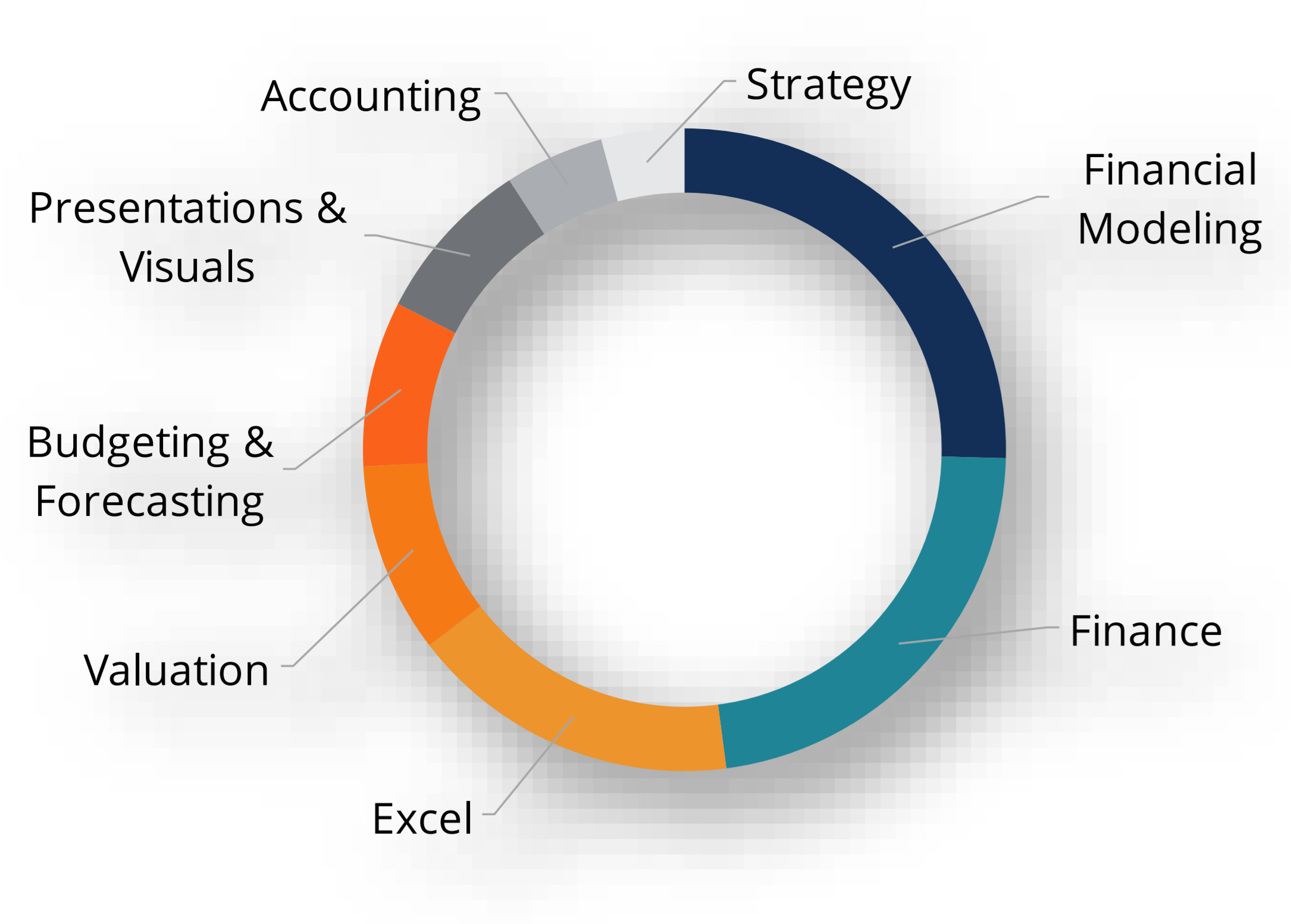
A well rounded financial analyst possesses all of the above skills!
CFI is the global institution behind the financial modeling and valuation analyst FMVA® Designation. CFI is on a mission to enable anyone to be a great financial analyst and have a great career path. In order to help you advance your career, CFI has compiled many resources to assist you along the path.
In order to become a great financial analyst, here are some more questions and answers for you to discover:


