Get Certified for Financial Modeling (FMVA)®
Gain in-demand industry knowledge and hands-on practice that will help you stand out from the competition and become a world-class financial analyst.
Finance is defined as the management of money and includes activities such as investing, borrowing, lending, budgeting, saving, and forecasting.
The financial system includes the circulation of money, the management of investments, and money lending. In businesses, the finance team is responsible for ensuring the company’s capital is adequate, that appropriate investments are made, and that the company’s revenues and expenses are well-managed.
The three main types of finance are personal finance, corporate finance, and public finance. Personal finance refers to individual money management, while corporate finance includes business capital and investment decisions. Public finance involves government fiscal policy and public spending.
Personal finance is the management of an individual’s or household’s income, expenses, investments, and obligations, such as income tax. Individuals often work with a personal banker, investment advisor, accountant, mortgage broker, and other professionals to manage their financial situation.
Bank accounts
Investments (stocks, bonds, real estate, etc.)
From a business perspective, corporate finance is the management of a company’s funding and its revenue sources, capital structure, and profit and loss (P&L) statement. Financial professionals employed by companies are responsible for managing the companies’ capital and financial performance. These roles include accountants, financial analysts, finance managers, and executives, such as the Chief Financial Officer (CFO).
Public finance includes managing a country’s national budget, treasury department, central bank, and other government agencies. It focuses on collecting tax revenue and spending that money on national services and programs such as roads, hospitals, and social security.
Watch this short video for a quick breakdown of the definition of finance with examples and common financial topics.
The easiest way to define finance is by providing examples of financial activities. Below is a list of the most common examples:

There is a wide range of topics that concern people in the financial industry. Below is a list of some of the most common topics you should expect to encounter in the industry.
A definition of finance would not be complete without exploring the career options associated with the industry. Below are some of the most popular career paths:

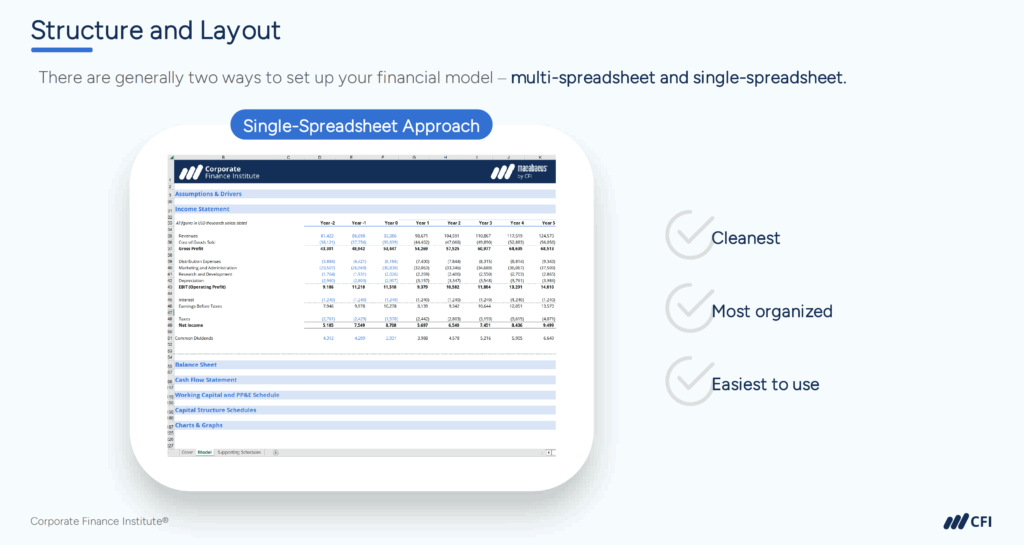
Across the entire industry, one of the most important and highly sought-after skill sets is financial modeling and the ability to create an Excel model that evaluates a particular situation. The screenshot below shows an example from one of CFI’s Excel modeling courses.
Finance is the management of money. It includes how individuals, businesses, and governments earn, spend, save, invest, and borrow money to achieve their financial goals.
Finance is the management of money and includes activities such as investing, borrowing, lending, budgeting, saving, and forecasting. Finance encompasses how people and organizations make decisions about acquiring and using financial resources.
The three main types of finance are personal finance (managing individuals’ money), corporate finance (managing business capital and investments), and public finance (managing government budgets and fiscal policy). Each type focuses on different financial decisions and stakeholders.
Finance jobs involve managing money and financial decisions for individuals, businesses, or governments. Common finance careers include financial analyst, investment banker, accountant, financial planner, wealth manager, and corporate finance professional. These roles focus on analyzing financial data, making investment recommendations, managing budgets, and helping organizations optimize their financial performance.
You can learn corporate finance through formal higher education, but many people build applied finance skills outside of degree programs. Online courses and certification programs are designed to bridge the gap between theory and real-world application. Starting with foundations in accounting, capital structure, and using Excel, these programs will help you gain a strong knowledge base to build upon.
CFI’s Financial Modeling & Valuation Analyst (FMVA®) certification provides this foundation through applied, hands-on learning recognized across finance and business.
To continue developing and preparing for a career in finance, these additional CFI materials will be helpful:
How to Choose the Right Career Path in Finance for Your Skills


