Get In-Demand Finance Certifications
The administration of business practices to maximize efficiency within the organization
Operations management is a field of business concerned with the administration of business practices to maximize efficiency within an organization. It involves planning, organizing, and overseeing the organization’s processes to balance revenues and costs and achieve the highest possible operating profit. An operations manager is tasked with ensuring that the organization successfully converts inputs such as materials, labor, and technology into outputs in an efficient manner.
Operations management is a field of business that involves managing the operations of a business to ensure efficiency in the execution of projects. It means that the individual in charge of the department will be required to perform various strategic functions. Some of the functions include:
Product design involves creating a product that will be sold to the end consumer. It involves generating new ideas or expanding on current ideas in a process that will lead to the production of new products. The operations manager’s responsibility is to ensure that the products sold to consumers meet their needs, as well as match current market trends.
Consumers are more interested in the quality of the product more than the quantity, and the organization should create systems that ensure the products produced meet the needs of the consumer.
Forecasting involves making predictions of events that will occur in the future based on past data. One of the events that the operations manager is required to predict is the consumer demand for the company’s products.
The manager relies on past and present data on the uptake of the company’s products to determine future trends in consumption. The forecasts help the company know the volume of products needed to meet the market demand.
Supply chain management involves managing the production process from raw materials to the finished product. It controls everything from production, shipping, distribution, to delivery of products.
The operations manager manages the supply chain process by maintaining control of inventory management, the production process, distribution, sales, and sourcing of suppliers to supply required goods at reasonable prices. A properly managed supply chain process will result in an efficient production process, low overhead costs, and timely delivery of products to consumers.
The operations manager is in charge of delivery management. The manager ensures that the goods are delivered to the consumer in a timely manner. They must follow up with consumers to ensure that the goods delivered are what the consumers ordered and that they meet their functionality needs.
If the customer is unsatisfied with the product or is complaining about certain features of the product, the operations manager receives the feedback and forwards it to the relevant departments.
Unlike the marketing or finance departments, where managers are responsible for their own departments, operations management is a cross-department role in which the manager assumes an array of responsibilities across multiple disciplines. To be successful, an operations manager must possess the following skills:
Organizational abilities refer to the operations manager’s ability to focus on multiple projects without being distracted by the many processes. The operations manager should be able to plan, execute, and monitor each project through to completion without losing focus.
If a manager is not organized, uncompleted tasks will pile up, important documents will get lost in the process, and a majority of the time will be spent finding lost documents that could be easily accessible had the manager been organized. Good organizational skills can increase production efficiency and help the manager save time.
An operations manager needs strong coordination skills, including the ability to integrate resources, activities, and time to ensure their proper use toward achieving the organization’s goals. Coordination involves carrying out specific activities simultaneously and switching between the activities with ease. It also involves dealing with interruptions, obstacles, and crises, and efficiently returning to normal routine functions to prevent further interruptions.
Most of an operations manager’s responsibilities involve dealing with people. This means they must know how to relate to employees, external stakeholders, and other members of senior management. An operations manager should know how to navigate the fine line with colleagues by communicating, listening, and relating to them on both professional and personal levels.
Since workplaces are made up of people from diverse cultures, the operations manager needs to show tolerance and understanding of others. Also, the manager should be able to resolve conflicts and mediate disputes among employees and senior staff members.
In this age of rapidly advancing technologies, an operations manager needs an affinity for technology to design processes that are both efficient and tech-compliant. Modern organizations are becoming increasingly tech-dependent in order to gain a competitive advantage in the market.
This means that most manual processes, such as procurement, must transition to more efficient automated processes. When an operations manager is familiar with the latest innovations in the tech industry, they can leverage them to improve internal processes.
Connect what you just learned to a clear career path with CFI’s role‑based courses and certification programs.
Thank you for reading CFI’s guide on Operations Management. To keep learning and developing your knowledge of financial analysis, we highly recommend the additional CFI resources below:
Below is a break down of subject weightings in the FMVA® financial analyst program. As you can see there is a heavy focus on financial modeling, finance, Excel, business valuation, budgeting/forecasting, PowerPoint presentations, accounting and business strategy.
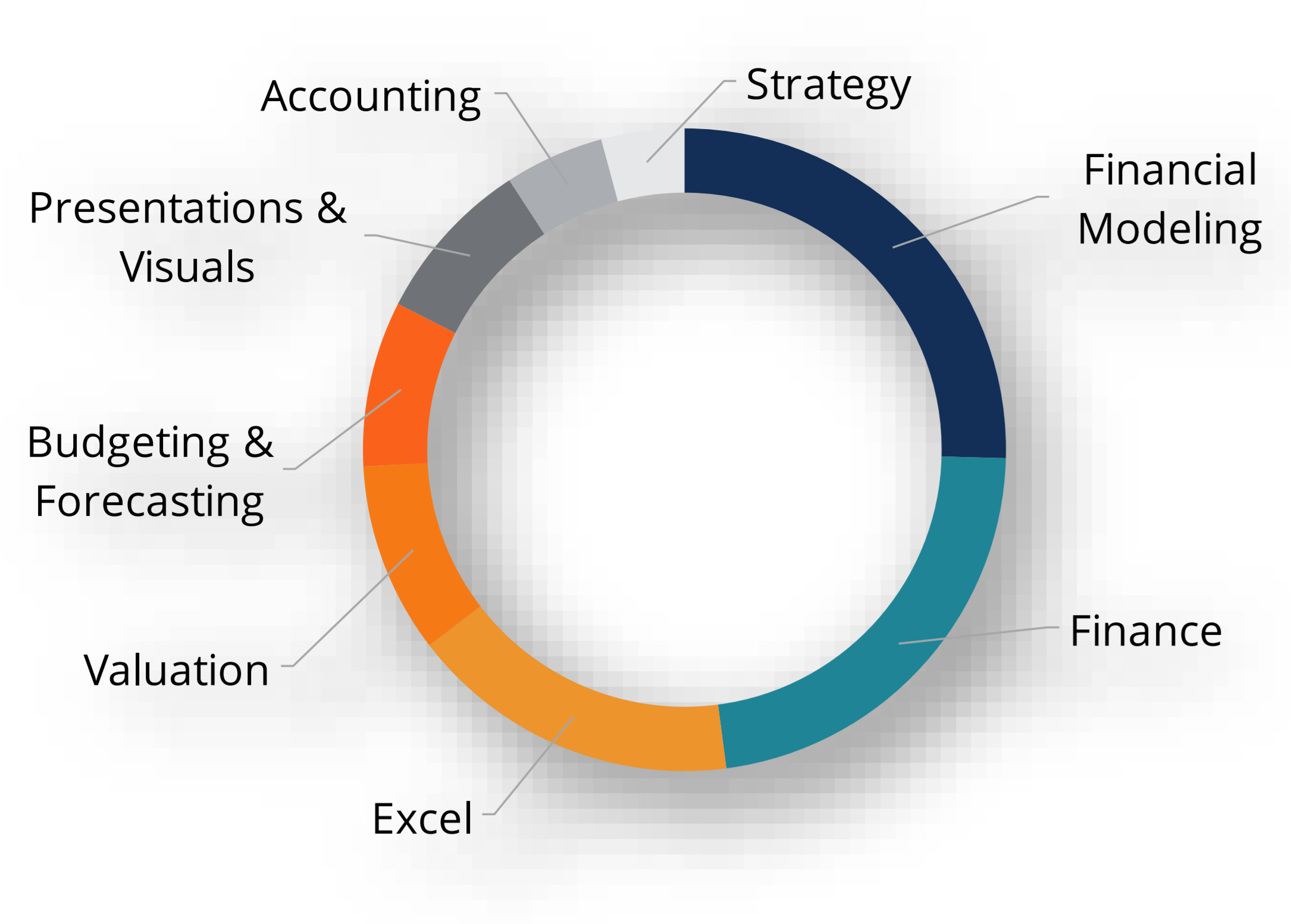
A well rounded financial analyst possesses all of the above skills!
CFI is the global institution behind the financial modeling and valuation analyst FMVA® Designation. CFI is on a mission to enable anyone to be a great financial analyst and have a great career path. In order to help you advance your career, CFI has compiled many resources to assist you along the path.
In order to become a great financial analyst, here are some more questions and answers for you to discover: