Overview
Driver-Based Forecasting Course Overview
Driver-based forecasting is important because traditional budgeting methods often explain what happened but not why, limiting effective decision-making. By linking financial outcomes to underlying business drivers, organizations gain clearer insight into performance and can make more informed planning decisions.
This course introduces the principles of driver-based forecasting and demonstrates how to identify, validate, and apply key drivers. Participants will learn how to use techniques such as regression analysis to build multi-driver models and improve forecast accuracy. The course also covers the distinction between controllable and non-controllable drivers and how to use scenario and sensitivity analysis to evaluate business decisions.
![]()
Who should take this course?
This course is for FP&A analysts, senior analysts, and finance managers who want to move beyond traditional budgeting and variance reporting into driver-based forecasting, building models that explain why the numbers move and support real decisions. It’s a strong fit for finance professionals progressing toward FP&A Manager, Finance Business Partner, or Director of FP&A roles.
Driver-Based Forecasting Learning Objectives
- Evaluate traditional forecasting approaches: Assess the limitations of traditional budgeting and variance analysis in explaining business performance drivers.
- Explain driver-based forecasting concepts: Define driver-based forecasting and differentiate between forecasting outcomes and forecasting underlying business drivers.
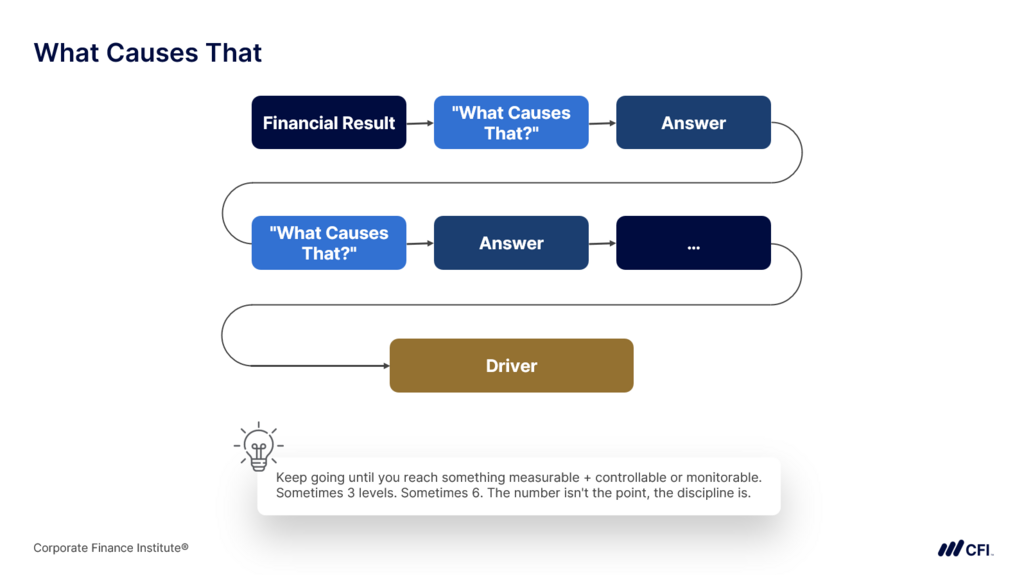
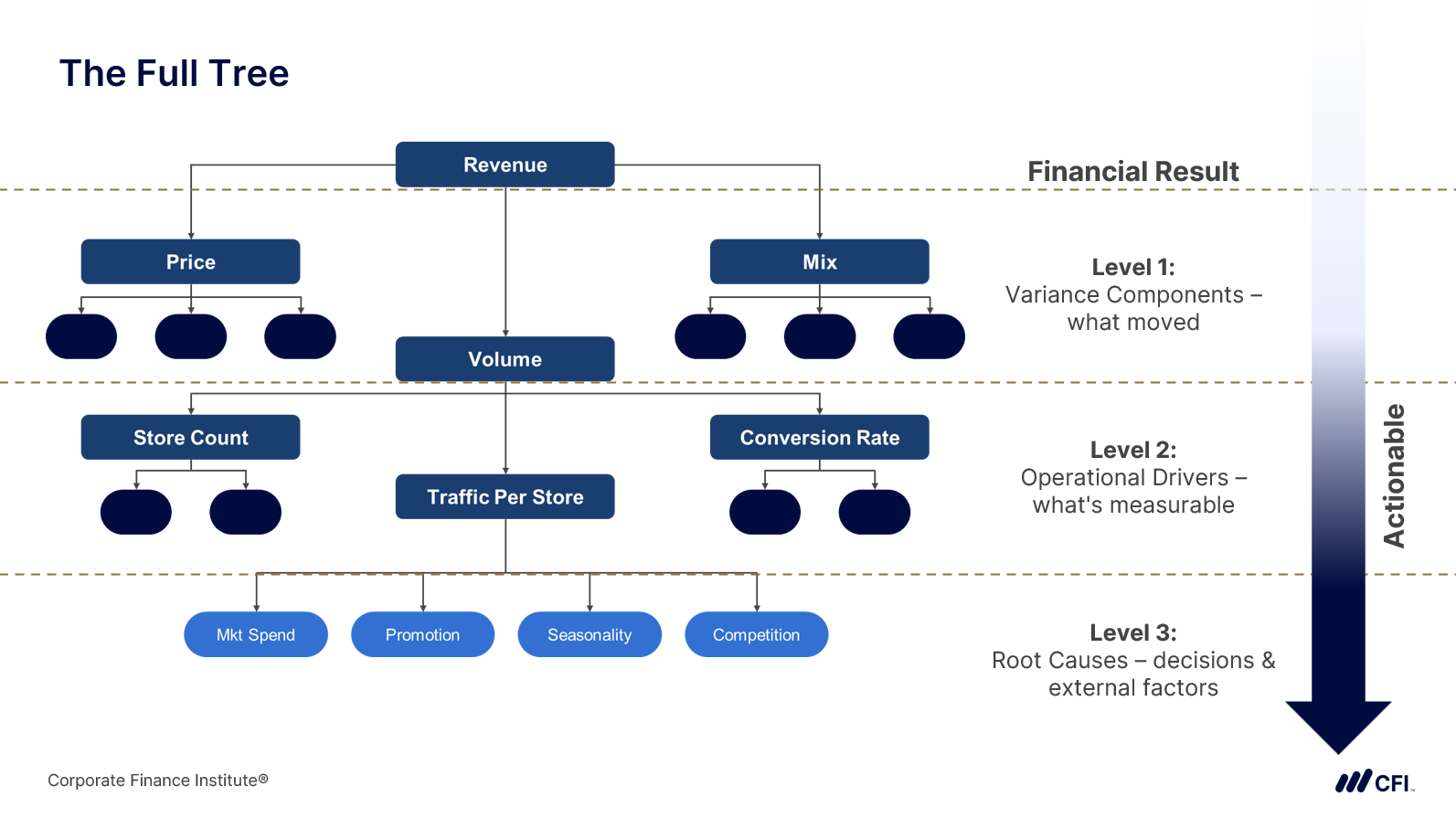
- Identify and structure key drivers: Determine appropriate business drivers and organize them into driver trees to link operational activities to financial outcomes.
- Validate drivers using quantitative analysis: Analyze relationships between drivers and outcomes using correlation, regression, and accuracy metrics to confirm predictive strength.
- Build multi-driver forecasting models: Develop forecasting models using multiple drivers and interpret regression outputs to quantify driver impact.
- Apply forecasts for planning and decision-making: Use driver-based models to perform scenario and sensitivity analysis, incorporating controllable and non-controllable drivers to support business decisions.
Prerequisite Courses
Recommended courses to complete before taking this course.

Level 3
4h
100% online and self-paced
Start LearningWhat You'll Learn
What We Already Know
Introduction to Driver-Based Forecasting
Validating Drivers with Historical Data
Multiple Drivers & Forecasting Improvements
Expanding Beyond Revenue
Qualified Assessment
This Course is Part of the Following Programs
Why stop here? Expand your skills and show your expertise with the professional certifications, specializations, and CPE credits you’re already on your way to earning.
Financial Planning & Analysis Professional
- Skills You’ll Gain Accounting, Finance, Excel, Data Analysis, Financial Statement Analysis, Financial Modeling, Budgeting, Forecasting, Power Query, Power BI, Data Visualization, Economics, and more
- Great For The FPAP certification focuses on practical, desk-ready skills that are immediately applicable to current FP&A professionals or anyone seeking to land a role in FP&A