Overview
Algorithmic Trading – Strategy Design and Execution Techniques Course Overview
Algorithmic trading sits at the intersection of quantitative finance, market structure, and technology, and it increasingly shapes how institutional investors execute decisions and manage risk. Understanding how algorithms work, and how to evaluate them honestly, is becoming a core skill for anyone working in capital markets.This course covers the full lifecycle of a rule-based trading strategy:
from sourcing and structuring market data, calculating returns and technical
indicators, and translating rules into executable signals, through to
backtesting with realistic transaction costs, evaluating risk-adjusted
performance using metrics such as Sharpe ratio and maximum drawdown, and
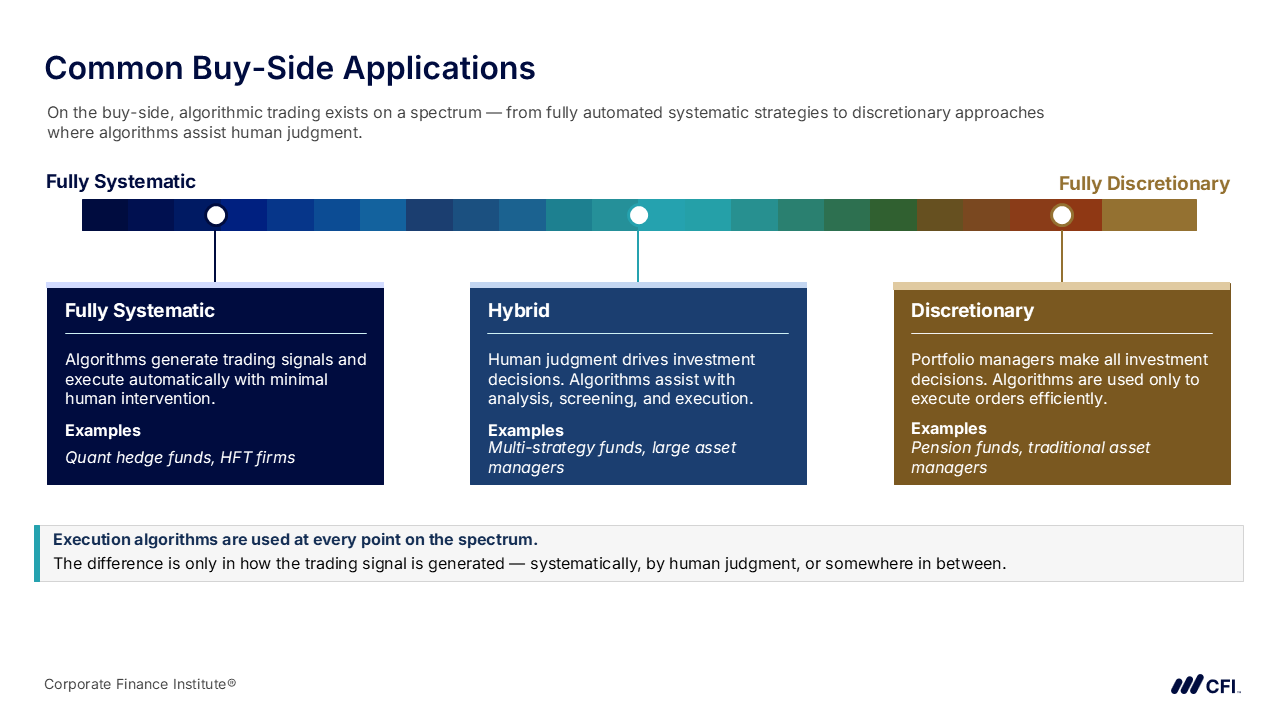
understanding how institutional execution algorithms manage market impact. AI
tools are introduced at key points in the workflow — including data validation
and performance interpretation, reflecting how they are practically applied in
professional trading environments.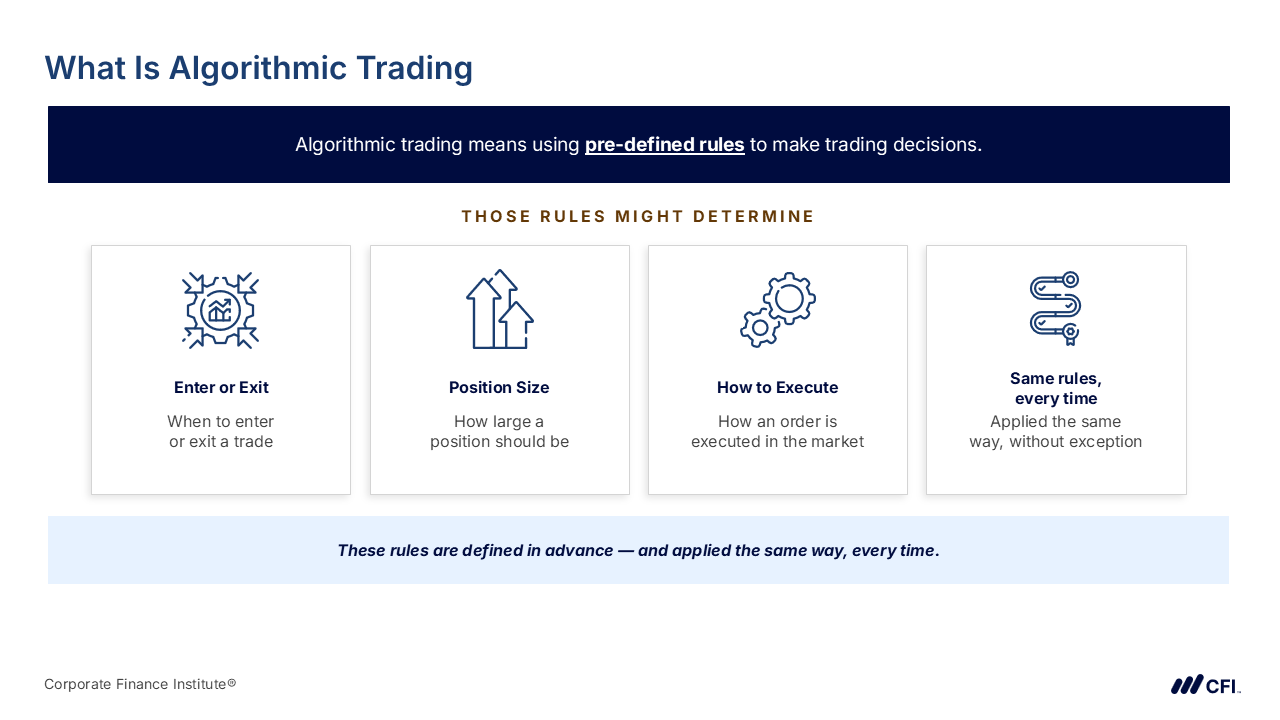
Who should take this course?
This course is designed for finance professionals and students pursuing a career in capital markets, sales and trading, asset management, or quantitative research who want to go beyond theoretical knowledge and develop hands-on experience building and evaluating algorithmic trading strategies.
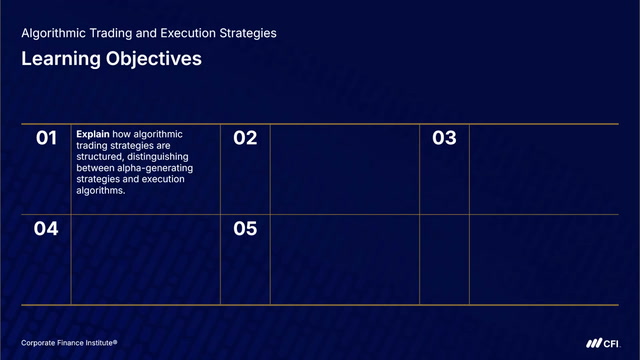
Algorithmic Trading - Strategy Design and Execution Techniques Learning Objectives
- Explain the structure and purpose of algorithmic trading strategies, distinguishing between alpha-generating strategies and execution algorithms and describing how each is used across institutional trading environments.
- Build a complete rule-based trading strategy in Excel, constructing the indicator calculations, signal logic, position sizing, and transaction cost model from raw historical price data.
- Evaluate the validity of a backtest by identifying common sources of bias — including look-ahead bias, data snooping, and unrealistic cost assumptions — and applying corrections to produce a more defensible result.
- Measure and interpret strategy performance using industry-standard risk-adjusted metrics, including annualized return, Sharpe ratio, maximum drawdown, and win rate, and assess results in the context of a passive benchmark.
- Analyze the role of execution algorithms in institutional trading, comparing VWAP, TWAP, participation of volume, and implementation shortfall approaches across different liquidity and urgency conditions.
Prerequisite Courses
Recommended courses to complete before taking this course.

Level 3
3h
100% online and self-paced
Start LearningWhat You'll Learn
Foundations of Algorithmic Trading
Execution Algorithms
Conclusion
Qualified Assessment
This Course is Part of the Following Programs
Why stop here? Expand your skills and show your expertise with the professional certifications, specializations, and CPE credits you’re already on your way to earning.
Capital Markets & Securities Analyst (CMSA®) Certification
- Skills Learned Trading strategies used in the finance and capital markets
- Career Prep Work in capital markets, whether on the buy-side or the sell-side