Get In-Demand Finance Certifications
Risk management professionals are essential to the stability and integrity of the financial services industry, attracting detail-oriented professionals who thrive at the intersection of analysis, strategy, and regulatory compliance.
This guide explores various career paths in risk management and provides insights into roles, responsibilities, skills, and qualifications required to succeed in this challenging yet rewarding field. You’ll learn what it takes to enter the profession, how careers progress, and the key considerations for those interested in pursuing this path.

Risk management is a specialized discipline within finance and banking focused on identifying, assessing, and mitigating potential threats to an organization’s financial health, operations, and reputation.
Within finance and banking, risk management plays a critical role in maintaining stability. Banks, investment firms, insurance companies, and corporate finance teams all rely on dedicated risk functions to ensure they operate within acceptable risk boundaries while pursuing growth and profitability.
Risk management is both a strategic and technical discipline. At its core, risk management involves building frameworks and processes that help organizations make informed decisions under uncertainty. The goal is to balance risk and reward in a way that supports long-term business objectives.
Risk management professionals work within banks, investment firms, insurance companies, and corporate finance teams to protect their organizations from financial and operational threats. They identify potential risks, assess their impact, and develop strategies to reduce or eliminate exposure before problems occur.
These professionals analyze data, monitor market conditions, review regulatory requirements, and build models that help organizations understand their risk landscape. Senior risk professionals lead risk governance frameworks, advise executive leadership, and ensure their organizations operate within regulatory and internal risk boundaries.
Risk management roles require strong technical and analytical skills, sound judgment, and a clear understanding of how risk exposure affects an organization’s financial position and strategic direction. Professionals in this field work closely with trading desks, finance teams, compliance departments, and senior leadership to ensure risk is managed consistently across the organization.
Success in a risk management career requires more than technical knowledge. It calls for a mix of hard and soft skills that allow you to identify threats, communicate findings clearly, and adapt quickly in a fast-moving regulatory environment.
Technical skills form the backbone of a risk professional’s role, enabling precise identification, assessment, and mitigation of potential threats. Beyond understanding risk, these skills involve frameworks to manage risk effectively and new tools like generative AI to assess risk.
Risk management is a demanding but highly rewarding career path. It offers strong job security, competitive compensation, and the opportunity to play a critical role in the financial health of your organization. However, the work requires precision, continuous learning, and the ability to perform well under pressure.
As risk professionals advance in their careers, their responsibilities shift from hands-on analysis to strategic oversight and leadership. Senior risk professionals spend more time advising executive teams, shaping risk governance frameworks, and influencing organizational strategy.
Overall, risk management rewards professionals who are intellectually curious, comfortable with complexity, and committed to protecting their organization from financial harm.
To pursue a career in risk management, you need a bachelor’s degree, typically in finance, economics, mathematics, statistics, or a related field. Many risk professionals also hold a master’s degree, such as an MBA or a Master’s in Financial Risk Management, which can support entry at a higher level and accelerate career advancement.
Professional certifications are not mandatory but are highly regarded and can give you a competitive edge. Widely recognized certifications and programs in risk management include Financial Risk Manager (FRM), CFI’s Risk Management Specialization, and Certified Financial Risk Professional (CFRP).
Risk analysts in banking and finance often specialize in one type of risk. While the risks faced by financial institutions are varied, here are three of the most common risk areas, each with unique challenges and opportunities:
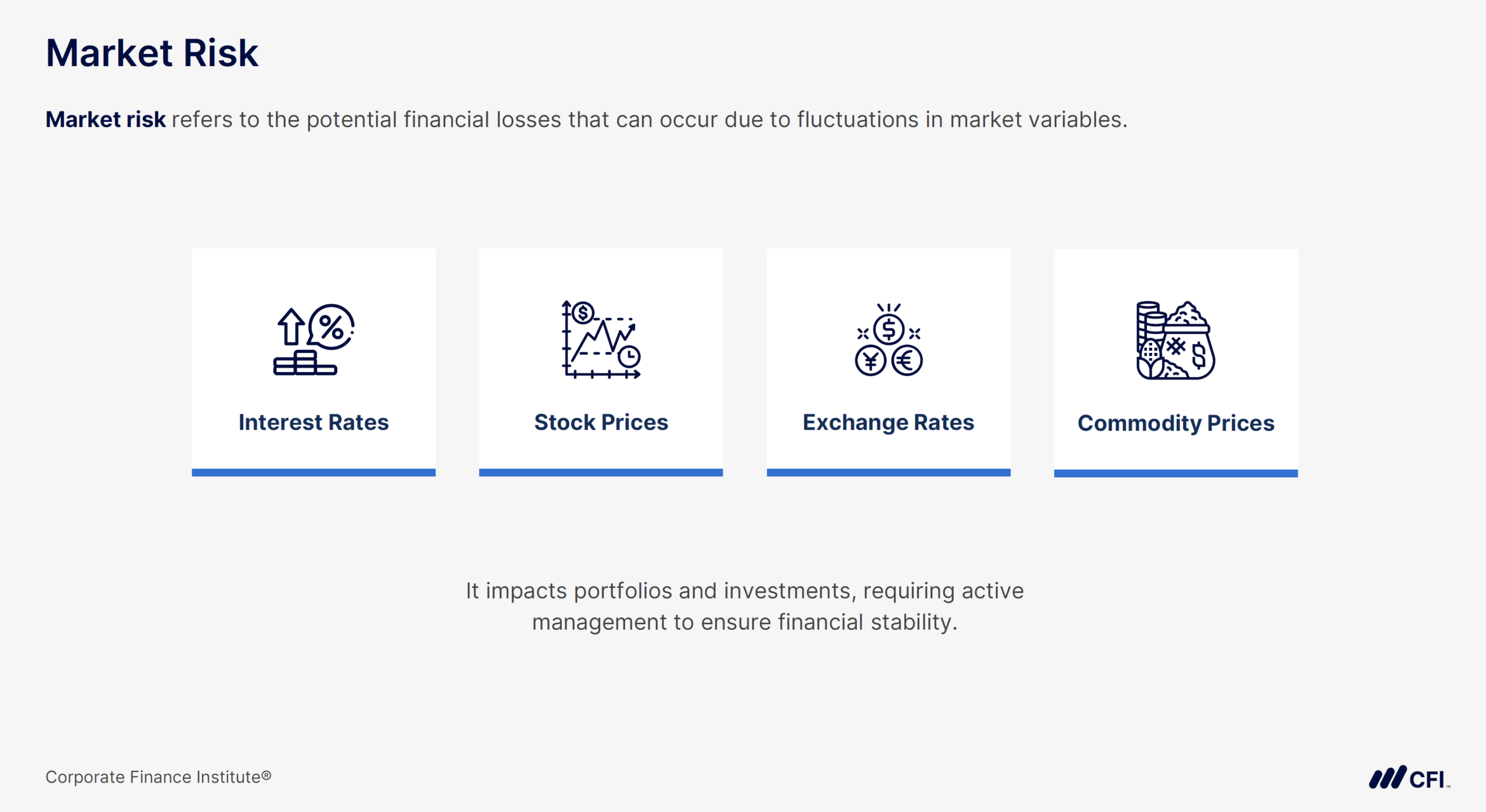
Market risk professionals focus on financial losses due to market fluctuations, such as changes in interest rates or stock prices. They work closely with traders and use tools like Value at Risk (VaR) to assess exposure.
A Typical Day: A market risk professional often starts their day by investigating overnight trading limit breaches. They monitor the day’s trading positions and collaborate with quants to refine internal models. Stress testing trading books for sudden market shocks may round out their day.
Credit risk professionals assess the likelihood of borrowers defaulting on loans and evaluate creditworthiness. They analyze financial statements, calculate key metrics, and make recommendations to minimize credit exposure.
A Typical Day: A credit risk professional might start their day reviewing loan applications or credit proposals from both retail and corporate clients, calculating credit ratios, or assessing the creditworthiness of borrowers. In the afternoon, they might meet with relationship managers to discuss client credit quality, review the corporate loan portfolio for potential deteriorations, or analyze credit watchlists to recommend appropriate risk mitigation strategies.
Operational risk professionals identify and mitigate risks related to internal processes, system failures, and external events. Their work ensures business continuity in the face of unpredictable disruptions.
A Typical Day: An operational risk professional begins with scheduled meetings to assess system changes and risk mitigation plans. The rest of the day could involve incident reviews or collaborating with cross-functional teams to address risks from external suppliers or IT systems.
While credit, market, and operational risk are among the most prominent areas, financial risk analysts can also specialize in other fields.
Risk management careers follow a clear and structured progression. As you gain experience and demonstrate strong analytical and leadership skills, you move from hands-on technical work into roles with greater strategic responsibility.
The typical progression looks like this:
Risk Analyst → Risk Manager → Head of Risk → Chief Risk Officer (CRO)
You might be asking, what is a risk analyst? Risk analysts are typically entry-level professionals and often recent university graduates. They perform the day-to-day analytical work that supports risk identification, measurement, and mitigation across the organization.
The primary responsibilities of a risk analyst include:
Risk analysts typically spend two to three years in this role, developing the technical foundation and institutional knowledge needed to progress to more senior positions.
Risk managers take on greater responsibility for overseeing risk functions and managing junior team members. They move beyond individual analysis to lead risk assessments, shape risk frameworks, and engage directly with stakeholders across the organization.
The key responsibilities of a risk manager include:
Risk managers typically spend three to five years in this role, building the leadership skills and strategic perspective required for senior positions.
The Head of Risk is a senior leadership role responsible for overseeing the entire risk management function within an organization or business unit. At this level, the focus shifts from managing individual risk assessments to setting the strategic direction for how risk is governed and managed across the organization.
Key responsibilities at this level include:
Professionals at this level are expected to combine deep technical expertise with strong leadership and communication skills.
The Chief Risk Officer is the most senior risk management role in an organization, responsible for the overall risk strategy and governance framework at the enterprise level. CROs sit at the executive table, working alongside the CEO, CFO, and board of directors to ensure the organization manages risk in a way that supports its long-term objectives.
Key responsibilities of a CRO include:
Reaching the CRO level requires years of experience across multiple risk disciplines, a strong track record of leadership, and the ability to communicate complex risk concepts clearly to non-technical audiences.
For those interested in a risk management career, here are actionable steps that can help you break into the profession and advance over time:
A career in risk management offers an intellectually stimulating and rewarding path for detail-oriented finance professionals. While demanding, it provides strong job security, competitive compensation, and the opportunity to play a critical role in protecting your organization’s financial health and stability.
For those looking to build the technical skills needed to enter or advance in risk management, CFI’s Risk Management Specialization provides hands-on training in risk identification, measurement, and mitigation strategies that you can apply directly to your role.
Ready to take the next step in your financial career? Check out CFI’s comprehensive course catalog to gain the knowledge and certifications that can set you apart in the world of investment banking. Explore CFI’s Career Map to discover the best path toward your professional goals.
Connect what you just learned to a clear career path with CFI’s role‑based courses and certification programs.