Overview
Judgment in AI Finance Workflows
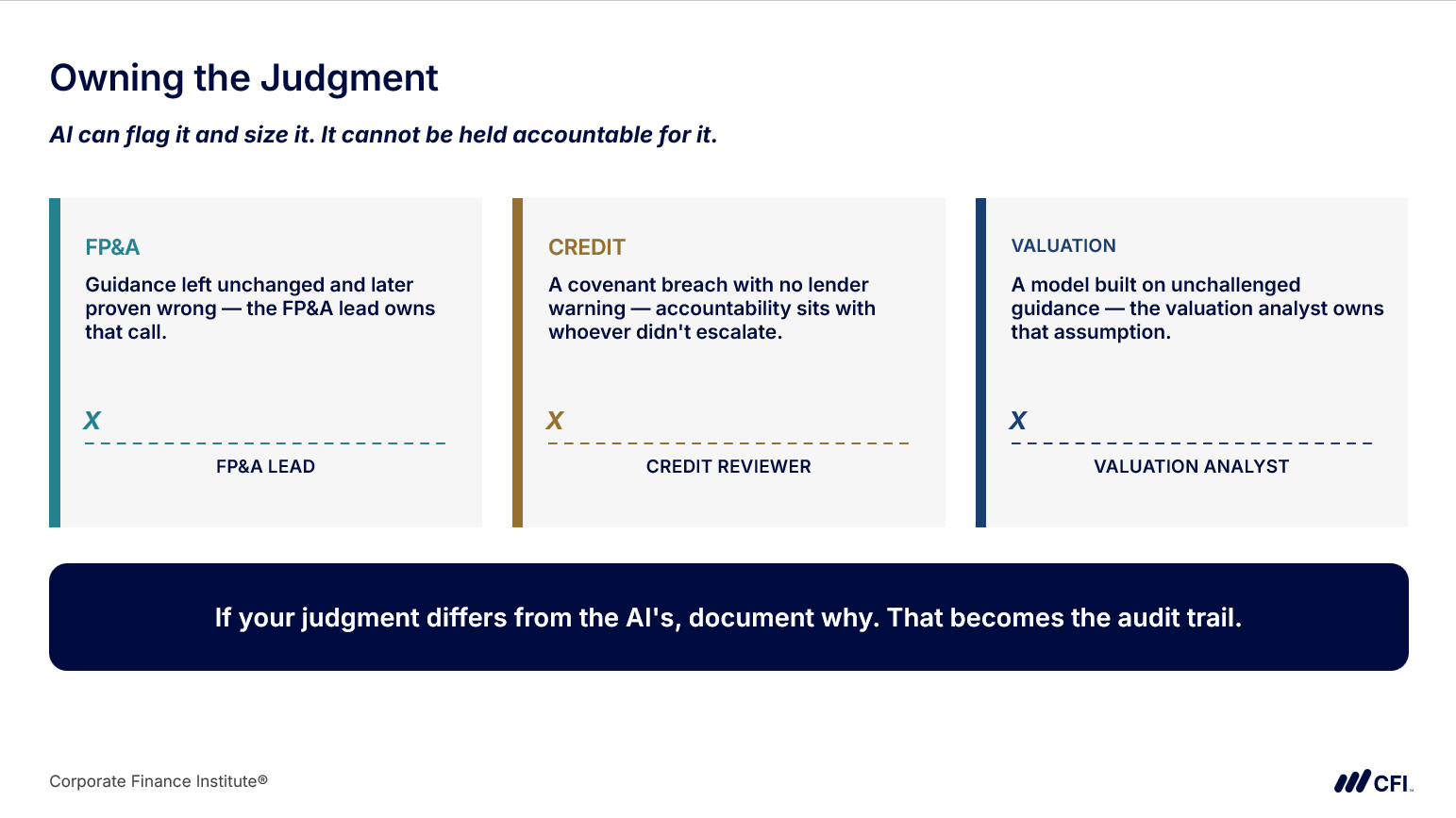
AI can accelerate analysis and drafting, but useful outputs still depend on professional judgment. Judgment in AI-Assisted Workflows explores how to decide where AI can support finance work, evaluate its outputs, and retain responsibility for the final result. You will examine how to frame tasks, check evidence and assumptions, identify errors and bias, and choose when to revise, reject, or escalate an AI-generated response. The course also considers how to match review effort to the consequences of a decision and communicate the limitations of AI-assisted work. Build a practical approach to using AI with greater confidence while keeping human review and accountability central to your workflow.
Who should take this course?
AI can accelerate analysis and drafting, but useful outputs still depend on professional judgment. Judgment in AI-Assisted Workflows explores how to decide where AI can support finance work, evaluate its outputs, and retain responsibility for the final result. You will examine how to frame tasks, check evidence and assumptions, identify errors and bias, and choose when to revise, reject, or escalate an AI-generated response. The course also considers how to match review effort to the consequences of a decision and communicate the limitations of AI-assisted work. Build a practical approach to using AI with greater confidence while keeping human review and accountability central to your workflow.
Tools Used in This Course
This course uses the free versions of Claude, ChatGPT, and Microsoft Copilot, along with Microsoft Excel.Judgment in AI Finance Workflows Learning Objectives
· Distinguish financial analysis from implication assessment in an AI-assisted finance workflow.
· Assess materiality and wider consequences across a range of finance roles.
· Evaluate AI-generated conclusions against evidence, constraints, assumptions, and uncertainty.
· Prioritize which implications require decision-maker attention.
· Translate implication analysis into an evidence-based briefing tailored to a specific audience.
Prerequisite Courses
Recommended courses to complete before taking this course.
Prerequisite Skills
Recommended skills to have before taking this course.
- Basic computer skills

Level 3
4h
100% online and self-paced
Field of Study: Information Technology
Start Learning