Get Certified for
Capital Markets (CMSA®)
From equities and fixed income to derivatives, the CMSA certification bridges the gap from where you are now to where you want to be — a world-class capital markets analyst.
Standard and Poor’s Depositary Receipts
Spider (SPDR), also pronounced and written as Spyder, refers to the Standard and Poor’s Depositary Receipts. It is also the trademark of Standard and Poor’s Financial Services LLC, a subsidiary of Standard & Poor’s (S&P) global owned by State Street Global Advisor (SSGA). SPDR belongs to a family of exchange-traded funds (ETF) that tracks the S&P 500 Index.
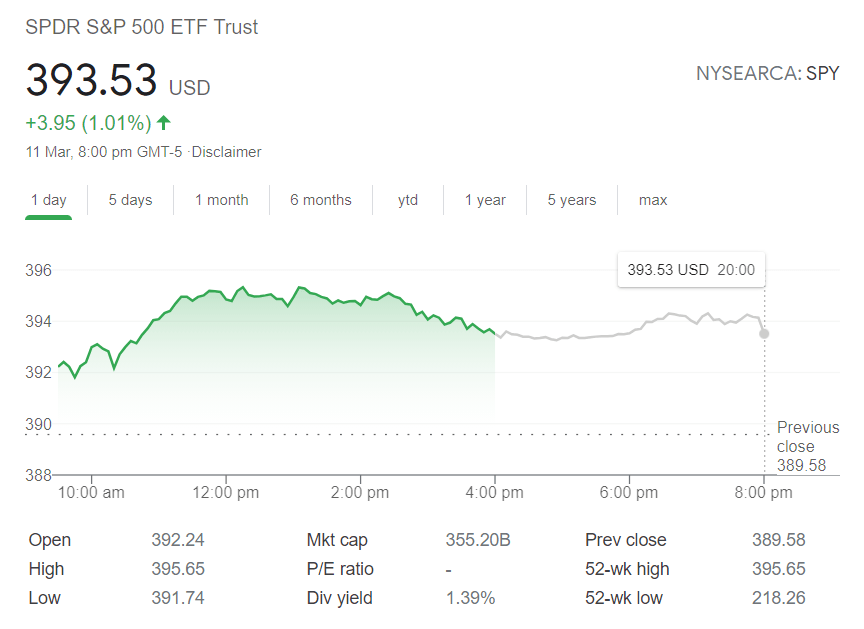
When SPDR was first created in 1993, the principal investment objective, in prices and yields before expenses, was to create an ETF that would closely mimic the S&P 500 index.
Doing so will allow all traders to buy and sell options or futures of its subsidiary ETFs without owning the underlying investment stocks. They are traded on stock exchanges such as the New York Stock Exchange (NYSE) under the ticker symbol SPY as units of an investment trust (UIT), closely replicating the S&P 500.
SPDR was first listed on the American Stock Exchange (AMEX) on January 22, 1993. It therefore became the first-ever exchange-traded fund in the history of the United States, issued by State Street Global Advisors (SSGA), an asset management company based in Boston, Massachusetts. The SPDR’s design is attributed to two AMEX executives, namely Steven Bloom and Nathan Most.
Interestingly, SPDR came into existence out of the 1987 severe market crash known as Black Monday. It was formed as a corrective measure to address issues identified in a Securities and Exchange Commission (SEC) report, which faulted automated orders for stock indexes.
Like most debuting products, it also faced its share of market-penetration resistance. However, it emerged as a reputable benchmark for overall U.S. financial health. With an initial security investment of $6.53 million, its total assets under management (AUM) are now estimated at $3.3 billion. A single unit option is priced at around $380.00.
S&P 500 comprises a basket of 500 United States large- and mid-cap companies listed on the National Stock Exchange (NSE) and spanning 24 separate industry sectors. A committee is tasked with selecting 500 companies based on size, liquidity, and sector. By far, it is one of the reputable benchmarks in the U.S. equity market. Its health denotes the economy is healthy and stable.
Since SPY behaves similarly to ordinary stocks and provides continuous liquidity, traders can short sell, trade on margins, yield quarterly dividends, and attract brokerage commissions. They are charged an expenditure proportion of 0.09%, which is equivalent to the ETF management fee. An investment of $9,000 will attract an approximately $180 annual management fee.
SPDR ETFs comprise 100+ families spread across divergent specializations like U.S. Equities, international equities, smart beta, fixed income, real assets, and commodities. Due to their diversity, they give traders a wide array of options to choose from or to be as specific with their choice as they would like.
New traders and even adept traders, who are not familiar with either term, may face difficulties differentiating between the two. SPDR refers to SPDR ETFs trusts grouped under Market ETFs, which track the S&P 500 Index. An alternative may be the NASDAQ index, among many others.
In contrast, ETF refers to all other trusts placed in different baskets of securities that can be sold or bought through a brokerage firm participating on a stock exchange. The basket comprises ten types of ETFs, not limited to Market ETFs, Commodity ETFs, Inverse ETFs, Foreign Market ETFs, etc. Simply, SPDR is one of the ETF investment vehicles that investors can trade like any other stock.
Due to SPDR’s wide acceptance in the market as one of the popular benchmarks for U.S. financial health, its ETFs are pretty stable and trustworthy. They are also designed to mimic the top active and listed stocks in the market.
Also, the ETF trusts are easy to trade. They behave like other stocks; therefore, traders can exercise all traditional stock strategies like short selling, stop losses, limit orders, etc. They are also listed in notable world stock exchanges, including in the U.S.
Connect what you just learned to a clear career path with CFI’s role‑based courses and certification programs.
CFI is the official provider of the Capital Markets & Securities Analyst (CMSA)® certification program, designed to transform anyone into a world-class financial analyst.
To keep learning and developing your knowledge of financial analysis, we highly recommend the additional resources below: