Corporate Functions
Banking Divisions
Institutional Investors
Career Path
Advance Your Career in Asset Management
Pursue a career in Asset Management with expert-led courses from CFI.
- Build core skills in investment analysis, portfolio management, and financial decision-making.
- Develop in-demand expertise in equities, fixed income, derivatives and alternative investments.
- Stand out to employers with CFI’s hands-on training in analysis, valuation, and portfolio evaluation

Explore Programs in this Field
Capital Markets &Securities Analyst (CMSA®)
Master Capital Markets knowledge and skills and stand out as a certified professional


-
CMSA® certification program
-
46 total courses (10 required)
-
Self-Paced & 100% Online


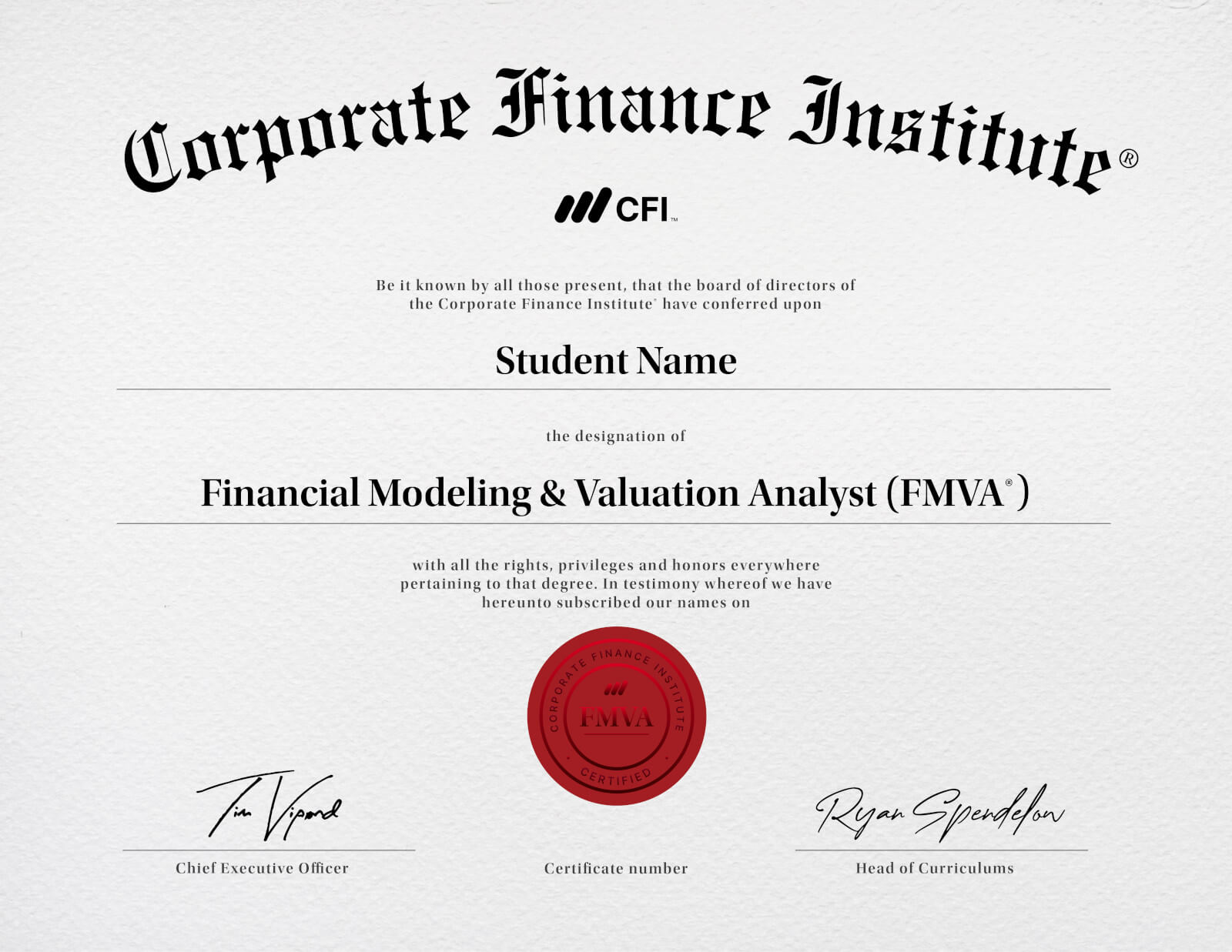
Financial Modeling & Valuation Analyst (FMVA®)
Learn advanced financial modeling, earn industry-standard credentials, and stand out as a top valuation expert

-
FMVA® certification program
-
45 total courses (15 required)
-
Self-Paced & 100% Online
Accounting for Financial Analysts Specialization
A hands-on learning path for financial analysts who need to interpret and analyze financial statements across different companies, industries, and geographies.


-
AFAS certification specialization
-
11 total courses (10 required)
-
Self-Paced & 100% Online
Business Intelligence & Data Analyst (BIDA®)
Lead the data revolution: Build in-depth expertise with hands-on BI & data analysis courses & labs


-
BIDA® certification program
-
31 total courses (17 required)
-
Self-Paced & 100% Online
Data Analysis in Excel Certificate
Be the Excel wizard everyone admires! Learn to manipulate and connect data, create and visualize insights from raw data, and leverage the latest Excel tools and add-ins to enhance your productivity.


-
Excel certification specialization
-
7 total courses (5 required)
-
Self-Paced & 100% Online
Business Intelligence & Data Analyst (BIDA®)
Lead the data revolution: Build in-depth expertise with hands-on BI & data analysis courses & labs
-
BIDA® certification program
-
31 total courses (17 required)
-
Self-Paced & 100% Online
AI for Finance Specialization
A practical, tool-based program for finance professionals and teams that want to use AI to accelerate data processing, automate manual tasks, analyze patterns faster, and find hidden insights.


-
AIFFS certification specialization
-
8 total courses (6 required)
-
Self-Paced & 100% Online
Cryptocurrencies and Digital Assets Specialist
Prepare for the future of finance by learning about cryptocurrencies and blockchain practically. Understand how to critically analyze digital assets and gain the skills needed to thrive in decentralized finance.


-
CDA certification specialization
-
5 total courses (4 required)
-
Self-Paced & 100% Online
Why Choose Asset Management
Learn more about Asset Management careersAsset Management is a dynamic career focused on managing investments to help clients achieve financial goals. Professionals apply analysis, market insight, and risk management to optimize returns. CFI’s programs build the investment analysis and reporting skills needed for success in asset management.
![]() Strong Industry Demand
Strong Industry Demand
 Strong Industry Demand
The continued growth of global markets and investment products drives strong demand for skilled asset management professionals across investment firms, banks, and fund managers.
![envelope money icon]() Competitive Compensation
Competitive Compensation
 Competitive Compensation
Asset management offers attractive salaries and performance-based bonuses tied to portfolio performance and assets under management.
![]() Analytical and Strategic Impact
Analytical and Strategic Impact
 Analytical and Strategic Impact
Professionals apply research, data analysis, and market insight to make investment decisions that directly impact client and institutional success.
Career Progression
Investment Analyst
Portfolio Manager
Senior Portfolio Manager
Director or Chief Investment Officer (CIO)