Get In-Demand Finance Certifications
Private equity is one of the most sought-after destinations in finance. This career path offers compensation that is among the highest in finance and the opportunity to work with exceptionally driven professionals. The specific job of a private equity professional varies from firm to firm, but overall, a private equity career involves a combination of capital fundraising, operational management, and investing.
This guide walks through what private equity professionals do, the skills and credentials you need, different career paths within the sector, and how careers typically progress.

Private equity is a form of investment where capital is invested directly into private companies or used to buy public companies and take them private. Unlike publicly traded stocks, private equity investments are not listed on a stock exchange. Investors typically aim to improve the company’s value over several years and then sell their stake for a profit.
Private equity firms raise money from investors, such as pension funds, endowments, insurance companies, and high-net-worth individuals. The firm pools this capital into a private equity fund and uses it to invest in companies.
The most common types of private equity include:
Private equity professionals are finance and investment professionals who identify, evaluate, acquire, manage, and eventually sell ownership stakes in private companies. They work for private equity firms, venture capital firms, family offices, and other organizations that invest capital outside public stock markets.
Private equity professionals are specialists who manage the private equity investment process, from sourcing deals to selling investments. They analyze companies, build financial models, conduct due diligence, negotiate transactions, support portfolio companies, and help plan exit strategies.
Many professionals enter private equity after gaining experience in investment banking, management consulting, transaction advisory, corporate finance, accounting, or corporate development.
Private equity roles require more than general finance knowledge. Professionals need to evaluate companies quickly, build conviction around investment decisions, manage complexity across the deal lifecycle, and communicate ideas clearly under pressure.
The exact skill mix varies by role and strategy. A buyout analyst, growth equity associate, and investor relations professional will not use the same tools every day. Even so, most private equity careers require a shared foundation across the areas below.
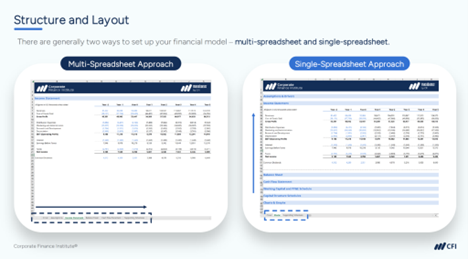
Financial modeling is one of the most important technical skills in private equity. Professionals use models to evaluate potential investments, test assumptions, and assess expected returns under different scenarios.
Financial modeling skills help private equity professionals:
Strong modeling skills allow professionals to move from raw financial data to a defensible investment view.
Valuation sits at the center of every investment decision in private equity. Professionals need to determine what a business is worth today and what it could be worth at exit.
Valuation skills help private equity professionals:
A strong grasp of valuation helps professionals assess deals with discipline and connect financial analysis to real investment decisions.
Private equity professionals spend significant time analyzing financial statements. A solid accounting foundation helps them assess the true financial health of a business before and after an investment.
These skills help private equity professionals:
Before committing capital, private equity professionals conduct thorough research on target companies, industries, and markets. Due diligence is the process of verifying assumptions and uncovering risks before a deal closes.
These skills help private equity professionals:
Private equity professionals do not just analyze numbers. They need to understand how businesses operate and what drives long-term value creation.
Business acumen helps private equity professionals:
Understanding how deals are structured is essential in private equity. Professionals need to know how capital is raised, how transactions are financed, and how returns are distributed.
Deal structure knowledge helps private equity professionals:
Private equity professionals need to communicate clearly and persuasively. Whether presenting to an investment committee, updating LPs, or working with portfolio company management, clear communication drives better decisions.
Communication skills help private equity professionals:
Much of the deal flow in private equity comes through relationships. Professionals who build strong networks are better positioned to source deals, access information, and work effectively with management teams.
Relationship building helps private equity professionals:
Private equity careers are known for their intensity and high-performance expectations. For the right person, the work is intellectually and financially rewarding. The environment demands a great deal, particularly in the early stages of a career.
Starting out in a private equity role, you can expect:
As professionals advance, the nature of the work shifts. Senior professionals take on greater responsibility for sourcing deals, working with portfolio company management, serving on boards, and maintaining LP relationships. The pressure shifts from executing analysis to making high-stakes investment decisions, supporting portfolio performance, maintaining investor relationships, and leading teams.
Overall, a private equity career demands strong technical skills, sound judgment, and the ability to perform consistently under pressure. For those who thrive in that environment, private equity offers some of the most intellectually engaging and financially rewarding work in finance.
Most private equity professionals hold at least a bachelor’s degree. Common backgrounds include finance, economics, accounting, business, mathematics, and other analytical fields. The most relevant degree often depends on the role, firm, and investment strategy.
Many private equity professionals hold an MBA, especially those who enter the industry as post-MBA associates. Top business schools are a common pipeline for post-MBA associate roles at larger firms, and some professionals pursue an MBA specifically to transition into private equity from another field.
While not an absolute requirement in private equity, the Chartered Financial Analyst (CFA) designation is a highly respected credential in the finance industry for careers tied to investment analysis and portfolio management.
In addition, financial modeling certifications help you build core technical skills and demonstrate commitment to the field. CFI’s Financial Modeling and Valuation Analyst (FMVA®) certification covers practical skills in Excel, financial analysis, modeling, and valuation. For advanced transaction modeling, CFI’s Investment Banking & Private Equity Modeling Specialization covers the deal-focused M&A and LBO modeling skills used in investment banking and private equity.
Private equity offers several distinct career paths, each focused on a different part of how a firm operates. Understanding these paths can help you identify where your skills and interests fit best.
The investing team are the professionals who source deals, conduct due diligence, build financial models, and execute transactions. Most people think of this path when they picture a private equity career.
As a member of the investing team, your work can include:
This path is most commonly accessed through prior experience in investment banking, management consulting, or equity research.
Professionals in the operations or portfolio group work directly with the firm’s portfolio companies to improve performance after an investment closes. They function as internal consultants, helping management teams execute on the value creation plan the firm identified at the time of investment.
In an operations role, your work can include:
This path suits professionals with backgrounds in management consulting, operations, or senior finance roles within industry.
The investor relations team manages the firm’s relationships with its limited partners. IR professionals communicate firm strategy, performance, and updates to current and prospective investors, and play a key role in fundraising.
In an IR role, your work can include:
This path attracts professionals with backgrounds in finance, communications, or client-facing roles in asset management or banking.
The finance and accounting team manages the internal financial operations of the firm. These professionals handle fund administration, financial reporting, tax compliance, and audit coordination, ensuring the firm operates with accuracy and regulatory compliance.
In a finance and accounting role, your work can include:
This path is well-suited to professionals with backgrounds in public accounting, fund administration, or corporate finance.
A typical day in private equity varies by role, firm size, and whether the team is actively working on a live deal. It also depends on whether you’re in a junior role or senior role. For early-career analysts and associates, the day usually revolves around financial analysis, diligence support, investment materials, meetings, and time-sensitive requests from senior team members.
The day often starts with checking emails, reviewing calendar items, and identifying what needs immediate attention. In private equity, priorities can change quickly if a new deal comes in, a banker sends updated materials, a lender needs information, or a portfolio company shares new financials.
An analyst or associate might spend the morning:
If the firm is evaluating a live deal, the morning may begin with a team discussion about the company, valuation, financing assumptions, key diligence questions, and next steps.
Late morning is often when junior professionals move into deeper analytical work. This time may be spent building or updating a financial model, reviewing company financials, or preparing analysis for a potential investment.
Typical tasks include:
For entry-level professionals, this work requires strong attention to detail. Small formula errors or incorrect assumptions can affect the team’s view of a potential deal.
Afternoons often include management presentations, lender calls, advisor updates, expert calls, portfolio company meetings, or internal investment discussions. Junior professionals may take notes, track follow-ups, update models, and revise materials based on new information.
Senior professionals usually lead the higher-level discussion, ask strategic questions, evaluate key risks, and decide whether the team should continue pursuing a deal, change its assumptions, or shift resources elsewhere.
Later in the day, the team often turns meeting takeaways into analysis. This may involve revising the model, updating a valuation analysis, drafting investment committee materials, summarizing diligence findings, or preparing materials for the next day’s meeting.
When a deal is live, the evening can be deadline-driven. Junior professionals may incorporate comments from senior team members, clean up models, update slides, or prepare responses to diligence questions. During quieter periods, the evening may be more focused on pipeline research, portfolio monitoring, or longer-term projects.
The key roles in private equity firms typically follow this hierarchical structure:
Analyst → Associate → Vice President → Director or Principal → Partner or Managing Director
Analysts are typically recent college graduates interested in pursuing a career in private equity. They often move over from investment banking or may be directly hired in this role and then progress to the senior associate position after completing an MBA.
Generally speaking, analysts are typically assistants to senior associates and other senior roles. They’re responsible for researching potential investment opportunities and handling the logistics of investments, such as the beginning stages of financial modeling and other types of support needed throughout the deal process.
Once an analyst earns an MBA and gains enough work experience, they typically move up to an associate role. Associates take on more responsibility for evaluating potential investment opportunities, conducting due diligence and market research, and managing existing portfolio companies.
They work closely with portfolio company management teams to drive value creation, lead deal teams, prepare investment memos, and further assist clients and teams through the entire investment lifecycle from sourcing to exit. They also typically mentor analysts starting out on their private equity career path.
Vice presidents typically lead investment teams, develop relationships with limited partners, and oversee specific investment deals. They manage teams of analysts and associates, supervise deal execution, and are considered one of the faces of private equity firms.
Private equity firms will have more than one VP at a time, and their jobs typically also include traveling to meet with new clients, mentoring senior and junior associates, and deal management.
Directors or principals of private equity firms are responsible for originating and executing deals, especially regarding deal negotiations. Directors typically have a strong influence over the firm’s overall investment strategy. They work closely with managing directors and VPs to ensure each investment deal aligns with the firm’s objectives.
Professionals at the director level are heavily involved with portfolio management to ensure the highest possible returns on each investment.
Managing directors or partners are the highest-ranking professionals within a private equity firm. They are largely responsible for the firm’s overall performance and strategic direction and are essentially involved with every aspect of operations, from fundraising to firm representation.
Most importantly, professionals in this top-level position focus on the human relationships within each partnership to ensure that their deal-making enhances both the firm’s reputation and the reputation of their investment company.
For those interested in a private equity career, especially finance students, recent graduates, and early-career professionals, here are a few practical ways to build the skills and experience employers look for:
Before applying for private equity roles, it is important to build the technical finance, modeling, business analysis, and communication skills that recruiters and hiring managers expect from early-career candidates.
Private equity can be an intellectually engaging and professionally rewarding career path. The work requires strong technical skills, sound judgment, and the ability to perform under pressure, but it also offers opportunities to develop deep investment expertise, work closely with businesses, and participate in complex, high-stakes transactions.
If you are exploring career options, consider how private equity compares with other finance paths based on your interests, strengths, and long-term goals. If you want to prepare for a career in private equity, focus on building skills in financial modeling, valuation, accounting, due diligence, and deal analysis.
Your path into private equity starts with curiosity, a genuine interest in how businesses create value, and a commitment to developing the technical and analytical skills that top firms expect.
Ready to take the next step in your financial career? Check out CFI’s comprehensive course catalog to gain the knowledge and certifications that can set you apart in the world of investment banking and private equity. Explore CFI’s Career Map to discover the best path toward your professional goals.