Get Certified for
Capital Markets (CMSA®)
From equities and fixed income to derivatives, the CMSA certification bridges the gap from where you are now to where you want to be — a world-class capital markets analyst.
The budgetary policy of the government
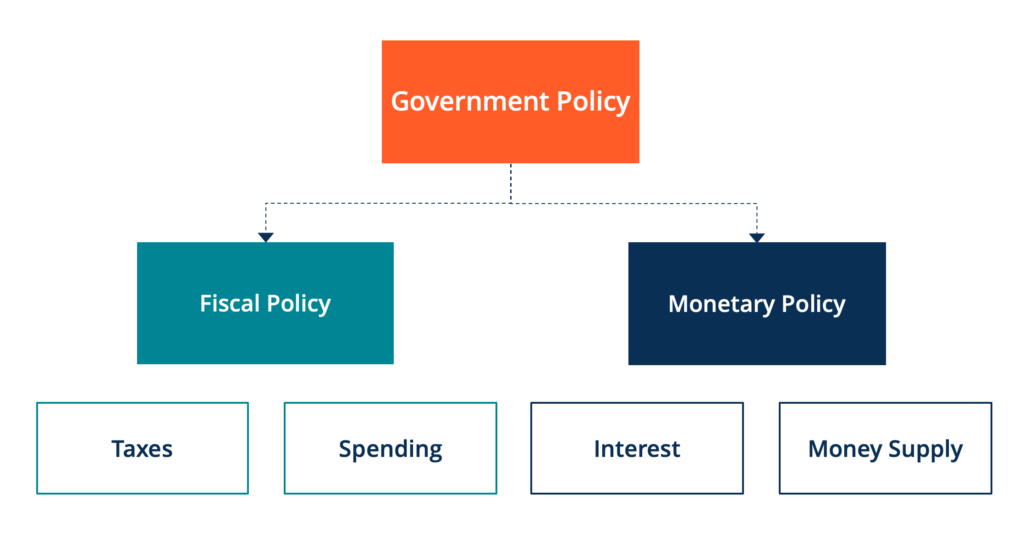
Fiscal policy refers to the government’s budgetary policy, which involves controlling its level of spending and tax rates within the economy. The government uses the two tools to influence the economy. It is the sister strategy to monetary policy.
Although both fiscal policy and monetary policy are related to government revenues and expenditures and both seek to correct situations of excess or deficient demand in the economy, they do so in very different ways.
Before the Great Depression, governments worldwide followed the laissez-faire policy (or “let it be”). This approach to the economy was based on the teachings of classical economists such as Adam Smith and Alfred Marshall. Classical economists believed in the power of the invisible hand of the market. They were of the opinion that the government should not interfere in the economy, as any market intervention was unwarranted.
However, the 1929 stock market crash, which ushered in the Great Depression, fundamentally changed the course of economic thought. The Depression resulted in low economic demand along with high unemployment. Classical economics was unable to provide a solution to the crisis.
In 1936, British economist John Maynard Keynes published “The General Theory of Employment, Interest, and Money” (commonly referred to as “The General Theory”). In it, Keynes called for an increase in government spending to combat the recessionary forces in the economy. He believed that an increase in government spending would bring about an increase in demand for commodities in the market.
The Second World War provided empirical evidence of Keynes’ theory. Nations worldwide increased government expenditure to build their armed forces. The rise in government expenditure led to significant growth in employment and an increase in demand for commodities in the market. In fact, the Second World War is often credited with helping Europe emerge from the Great Depression.
Proponents of Fiscal Policy utilization believe that public finance can influence inflation and employment by manipulating two key variables:
In times of economic contraction, such as the Great Depression of the 1920s and 1930s and the 2008-2009 financial crisis, the government employs Expansionary Fiscal Policy. This involves a reduction in taxes and an increase in government spending. Both measures aim to stimulate the economy and boost economic activity.
During a recession, producers and consumers both lose faith in the market. Thus, consumers reduce their consumption, and producers cut their production. As a result, the economy stagnates.
In 2009, when Barack Obama took office as President of the United States, he signed the American Recovery and Reinvestment Act (ARRA). The ARRA was a stimulus package that involved government spending of nearly $800 billion. The ARRA was intended to create jobs, boost demand, and restore confidence in the economy as a whole. Many have argued (mostly fiscal conservatives) that Obama could have achieved a similar result by cutting taxes
If, instead, the government faces a situation of high inflation characterized by excess demand in the market, it can engage in contractionary fiscal policy. For example, the government can impose new taxes and raise existing tax rates. This will reduce disposable income, causing consumption and investment to fall, thereby correcting the situation of excess demand.
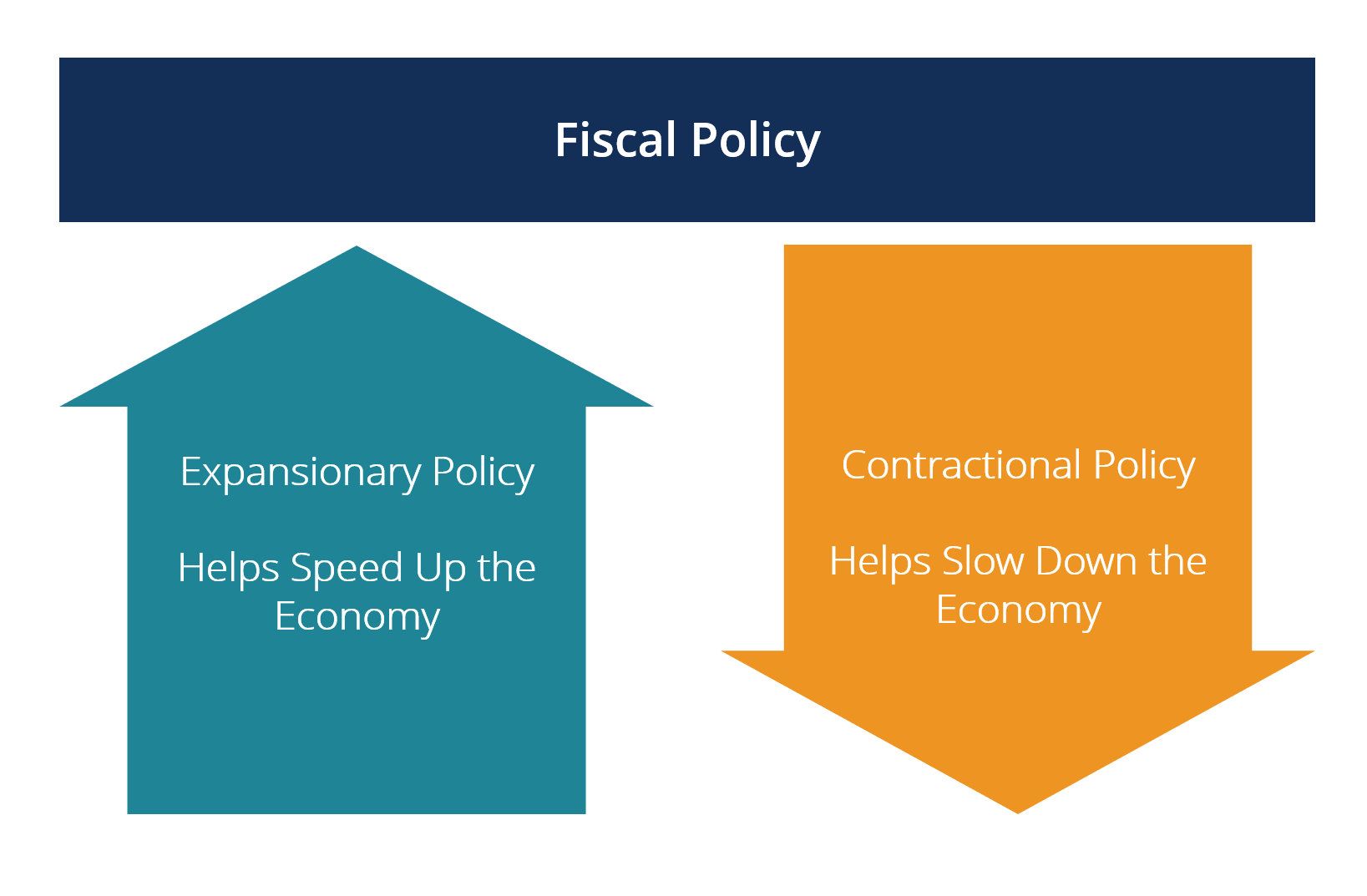
According to classical Keynesian economics (from the General Theory of Employment), a reduction (or increase) in taxes and an increase (or reduction) in government spending affect the economy in similar ways. However, the government may choose to utilize one over the other for various reasons.
For example, raising taxes tends to make governments extremely unpopular. Hence, most governments, when faced with inflation and excess demand in the market, tend to lower government spending instead of raising taxes.
Watch this short video to quickly understand the main concepts covered in this guide, including the origins of fiscal policy and how fiscal policy is used to influence the economy.
Thank you for reading CFI’s guide on Fiscal Policy. To keep advancing your career, the additional resources below will be useful: