Get In-Demand Finance Certifications
Hedge funds are one of the most competitive destinations in finance. The work is intellectually demanding, the compensation can be significant, and the people around you are driven. The path in and the path up look different from most other finance careers.
This guide walks you through what hedge fund professionals do, what skills and credentials you need, different roles, and how careers typically progress.

A hedge fund is an investment fund where professional managers pool money from investors and try to grow it using a wide range of strategies. Unlike traditional funds, these funds have more freedom in how they invest, often using sophisticated hedge fund strategies to try to boost returns.
Fund managers make investment decisions on behalf of their clients, called limited partnerships (“LPs”). LPs typically include institutional investors, like pension funds and insurance companies, and high-net-worth individuals.
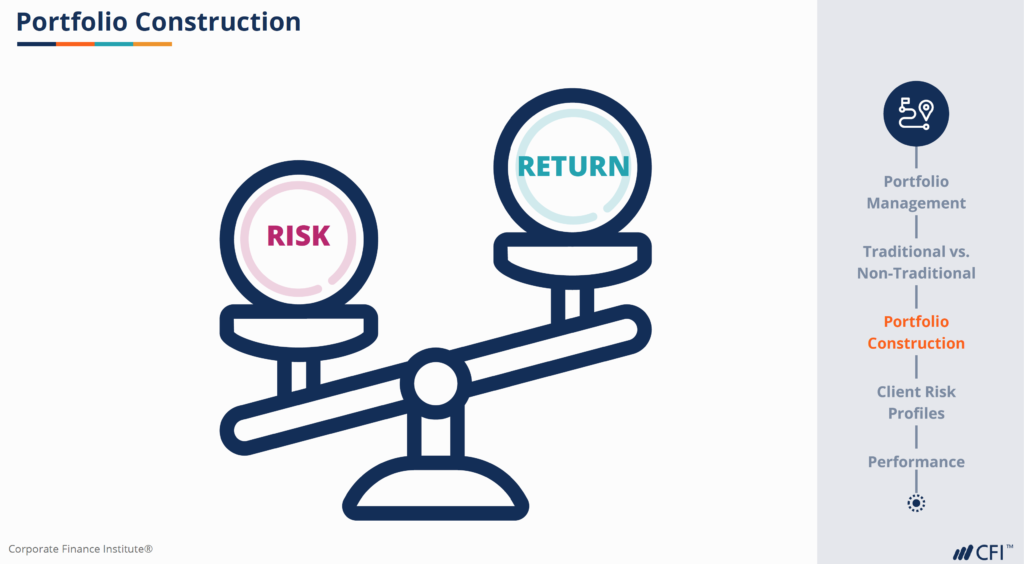
While the potential for returns is higher in hedge funds, they also carry higher risk than many traditional investment products like mutual funds. Hedge funds are regulated, but requirements are often less stringent compared to mutual funds.
Hedge fund professionals are the people who manage, analyze, and operate hedge funds. Their work spans investment research, trade execution, risk management, and fund operations.
The people who thrive in hedge funds typically come from backgrounds in finance, economics, mathematics, or computer science. Many enter the industry after working in investment banking, asset management, or academia. Some quantitative roles attract professionals from engineering and data science as well.
Most hedge fund teams are small compared to large banks or asset managers. A single fund might employ anywhere from a handful of people to several hundred, depending on its size and strategy. Each person on the team tends to carry significant responsibility.
Hedge fund roles require more than general finance knowledge. Hedge fund professionals need to evaluate markets quickly, develop strong investment views, manage risk with discipline, and communicate ideas clearly under pressure.
The exact skill mix varies by role and strategy. A fundamental equity analyst, macro trader, quant researcher, and investor relations professional will not all use the same tools every day. Even so, most hedge fund careers require a shared foundation in research, market judgment, risk awareness, and decision-making.
At the core of many hedge fund roles is the ability to turn information into an investment view. Professionals must analyze companies, sectors, industries, and market conditions to identify opportunities and spot risks before they affect performance.
Hedge fund professionals use research and analytical skills to:
Strong analytical thinking helps hedge fund professionals move from raw information to a differentiated investment thesis.
For many hedge fund analysts, especially in fundamental analysis roles, financial modeling and valuation are a major part of the job. These skills help analysts test assumptions, estimate downside and upside, and assess whether the market is mispricing a company or asset.
Hedge fund professionals use modeling and valuation skills to:
A strong grasp of accounting also matters because hedge fund professionals need to understand earnings quality, working capital changes, and other financial statement details that can affect an investment thesis.
Hedge funds are closely tied to public markets, so professionals need a strong feel for how markets behave and what drives price movement. This market awareness includes understanding investor expectations, market narratives, sector dynamics, and short-term or long-term catalysts.
Market knowledge helps hedge fund professionals:
This market knowledge helps hedge fund professionals separate interesting research from investable opportunities by focusing on price-moving events, market expectations, and trade timing.
Finding a strong investment idea is only part of the job in a hedge fund. Professionals also need to think about how that idea fits with the rest of the fund’s investments and how much risk it could add.
These skills help hedge fund professionals:
In hedge funds, managing risk is part of every investment decision. It affects which ideas move forward, how large a position should be, and when it may be time to reduce or sell an investment.
Data analysis plays an important role in many hedge fund careers. Professionals use data to support research, identify trends, compare companies, and make better-informed investment decisions.
Data analysis skills help hedge fund professionals:
Strong data analysis skills help professionals turn large amounts of information into useful insight.
Some hedge funds, especially those using systematic or model-driven strategies, place a much heavier focus on quantitative skills. In these roles, professionals use statistics, coding, and testing methods to evaluate signals and build trading or investment models.
Quantitative skills help professionals:
These skills are especially relevant in quant and systematic roles, but they are less central in many fundamental hedge fund careers.
Hedge fund professionals need to communicate clearly and concisely. Whether they are pitching a trade, writing a research note, defending a recommendation, or updating investors, they must present ideas in a way that is logical, focused, and easy to act on.
Communication skills help hedge fund professionals:
In a fast-moving environment, clear communication improves both the speed and quality of decision-making.
Technical ability matters, but so does judgment. Hedge fund professionals often work in high-pressure environments where mistakes can be costly. They need to stay disciplined, question their own assumptions, and handle information responsibly.
These qualities help professionals:
Strong judgment helps hedge fund professionals stay consistent, especially when markets become volatile or uncertain.
Hedge fund careers are known for their intensity and high performance expectations. For the right person, the work is intellectually rewarding and financially significant. But the environment demands a great deal, particularly in the early stages of a career.
Starting out in a hedge fund role, you can expect:
As professionals advance, the intensity of the work does not necessarily decrease. Senior professionals take on greater responsibility for fund performance and investor relations. The pressure shifts from executing analysis to making high-stakes investment decisions and managing a team.
Overall, a hedge fund career demands strong technical skills, sound judgment, and the ability to perform consistently under pressure. For those who thrive in that environment, it offers some of the most intellectually engaging and financially rewarding work in finance.
Most hedge fund professionals have at least a bachelor’s degree. Common backgrounds include finance, economics, mathematics, engineering, computer science, and other related fields. The most relevant degree often depends on the type of role and the fund’s strategy.
At more quantitative funds or in roles focused on data, modeling, and systematic investing, advanced study in mathematics, statistics, computer science, physics, or financial engineering is common. Some hedge fund professionals also hold MBAs, but the degree is usually less central to hedge fund hiring than it is in investment banking.
Professional credentials can help you build technical skills and show commitment to the field. The Chartered Financial Analyst (CFA) designation is a widely recognized credential in investment management. CFI’s Capital Markets & Securities Analyst (CMSA®) certification is especially relevant because it builds practical knowledge in capital markets, securities, trading, and risk management.
Within hedge funds, there are several career paths you can pursue, each focused on a different part of the investment process:
As a research analyst, you study companies, industries, and market trends to help the fund find investment opportunities. You build financial models, review earnings and other company updates, and develop investment ideas to present to portfolio managers. This path is common at fundamental hedge funds, where success depends on deep research and strong judgment.
As a quantitative researcher, you use data, statistics, and programming to support investment decisions. You test strategies, analyze patterns in market data, and build models that help identify potential trades. This path is more common at systematic or data-driven hedge funds, where investment decisions rely heavily on research built from large datasets.
As a trader, you are responsible for buying and selling investments on behalf of the fund. You focus on getting trades done efficiently while paying attention to price, timing, and market conditions. At some hedge funds, you mainly execute decisions made by others. At other funds, you may also help generate ideas based on market activity.
As a portfolio manager, you oversee investment decisions for a fund or a portion of the fund’s capital. You decide which positions to add, reduce, or exit, and you manage risk across the portfolio. This path usually comes after several years of experience in research, trading, or another investment role.
Not every hedge fund career path sits directly on the trading desk. In a risk management role, you help the fund monitor exposures and understand how market changes could affect performance. In an investor relations role, you communicate the fund’s strategy and results to current and prospective investors.
In the end, education and certifications can strengthen your profile, but hedge funds still hire based on skill, judgment, and investing ability. Relevant training matters, but hedge funds also want to see real-world experience analyzing companies, markets, or data.
No two days in a hedge fund are exactly the same, but many follow a similar rhythm shaped by market hours, research, and portfolio decisions.
Many hedge fund professionals start early to review overnight news, market moves, earnings updates, and economic data. This helps them understand what may affect current positions or create new opportunities before the market opens.
Once markets open, the focus shifts to trading, monitoring positions, and responding to new information. Traders work on execution, while analysts and portfolio managers watch for developments that could change an investment view.
Midday is often used for ongoing research. Professionals may read research reports, update models, review data, or develop new investment ideas. Some may also attend company presentations or management meetings.
The afternoon is often used for deeper analysis and internal discussions. Teams may review current positions, discuss new ideas, assess risk, or decide whether changes are needed in the portfolio.
After the market closes, professionals review performance, update their work, and prepare for the next day. At some funds, senior team members may also spend time on investor communication or fundraising.
Hedge fund career progression is usually less structured than it is in investment banking or large asset managers. Advancement depends more on performance, investment judgment, and the ability to manage risk than on tenure alone. Titles also vary from one fund to another, but many hedge funds follow a general progression like the one below.
Analyst → Associate → Portfolio Manager → Fund Manager → Partner or Chief Investment Officer (CIO)
Many hedge fund careers begin at the analyst level. In this role, you research companies, industries, or markets, build models, monitor positions, and help support investment decisions.
Your primary responsibilities will include:
Many analysts join hedge funds after experience in investment banking, equity research, or another investment-focused role. Some larger funds also hire directly from undergraduate or graduate programs.
After gaining experience, you may move into a more senior research role. At this stage, you take more ownership over a coverage area and play a bigger role in idea generation and portfolio discussions.
Key duties at this level can include:
The exact title varies from fund to fund, but many have an intermediate stage between junior analyst and portfolio manager.
Portfolio managers take direct responsibility for investment decisions and capital allocation. In some funds, you manage part of the fund’s capital. In others, you might run a broader portfolio within the fund’s overall strategy.
As a portfolio manager, your primary responsibilities can include:
Moving into this role is a major step that requires more than strong research skills. Portfolio managers also need to manage risk, size positions well, and stay disciplined under pressure.
At the most senior level, a hedge fund may be led by a fund manager, partner, chief investment officer, or founder. Titles vary by firm, but this role usually sits at the top of the organization and helps shape the fund’s overall strategy, capital allocation, and long-term direction.
At this level, you often:
Reaching the hedge fund manager level usually requires years of strong performance, deep market experience, and the ability to lead both people and investment strategy.
Success in a hedge fund career takes more than intelligence and hard work. The professionals who build lasting careers in this field combine strong technical skills with sound judgment, intellectual honesty, and the ability to perform consistently under pressure.
A hedge fund career can offer an intellectually engaging and financially rewarding path for finance professionals who are drawn to markets, investing, and high-stakes decision-making. The work is demanding and performance-driven, but it also offers strong opportunities for skill development, market exposure, and direct involvement in investment decisions.
For those exploring career options, it is worth considering how hedge funds compare with other finance paths based on your interests, strengths, and long-term goals. If you want to prepare for a career in hedge funds, focus on building skills in investment research, financial modeling, risk management, and market analysis.
Your path into hedge funds starts with curiosity, a genuine interest in markets, and a commitment to developing the technical and analytical skills the industry demands.
Ready to take the next step in your financial career? Check out CFI’s comprehensive course catalog to gain the knowledge and certifications that can set you apart in the world of investment banking. Explore CFI’s Career Map to discover the best path toward your professional goals.