Get In-Demand Finance Certifications
A minor should be listed after the major on the resume
A minor should be listed on your resume after the major, either on the same line or one line below your major. The key is to ensure clean formatting and easy readability. This guide will provide you with a detailed breakdown of how to list your minor on a resume.

Below is an example of how to put your minor on resume. As you can see in the screenshot below, the person has included the name of their university, the date of graduation, major, minor, GPA, and relevant coursework.
Dartmouth College | Hanover, NH
Bachelor of Arts, Major in Economics, Minor in History
Let’s recap how to list a degree on your resume, including minor on resume. Below is a list of all the information you need to include when you list education on your resume.
Key information:
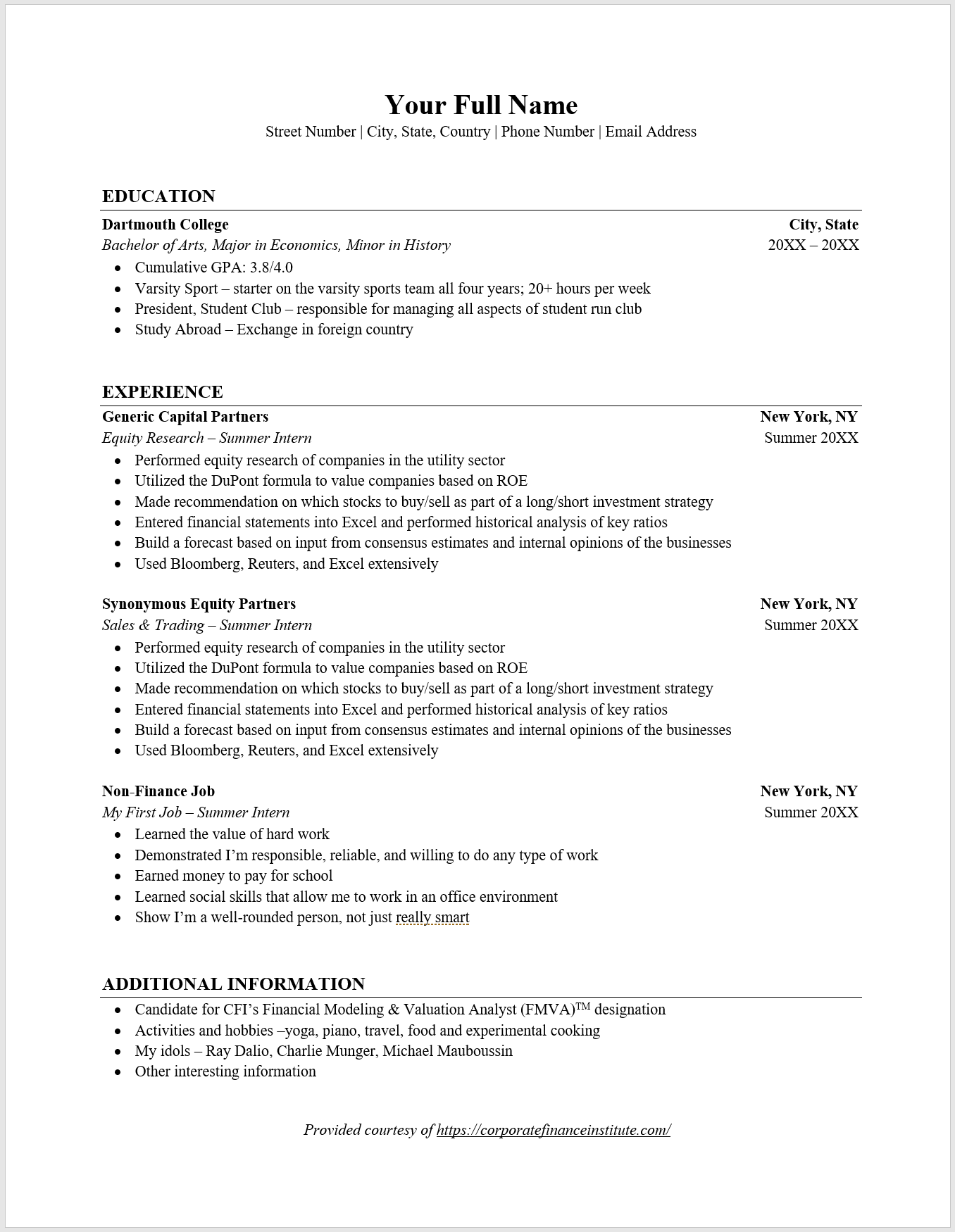
Image from CFI’s Free Resume Template.
A minor shows employers depth beyond your major, and a professional certification can do the same once you’ve graduated. This guide to certifications vs. degrees explains what each signals to employers and how the time and cost compare.
Below are some helpful tips to keep in mind when preparing your job application:
Your major and minor tell employers what you studied, while a professional credential shows you can apply it on the job. If you’re looking to add one, this comparison of the top finance certifications outlines the focus, cost, and career fit of the FMVA®, CFA, CPA, and other options. If you’re not sure the time will pay off, this look at whether finance certifications are worth it shares what learners say about the results.
Thank you for reading CFI’s guide on how to list a minor on resume. If you’re looking to stand out in a crowded job market, you should consider CFI’s Financial Modeling and Valuation Analyst (FMVA)TM certification to help you get the job-based skills Wall Street employers are looking for. To help boost your job application, these free resources will help: