Get Certified for Financial Modeling (FMVA)®
Gain in-demand industry knowledge and hands-on practice that will help you stand out from the competition and become a world-class financial analyst.
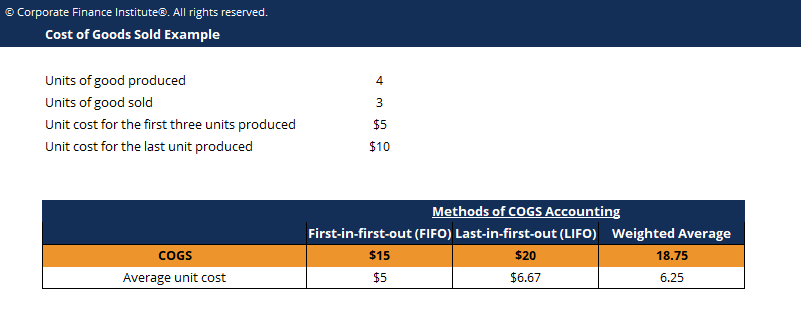
This cost of goods sold template demonstrates three methods of COGS accounting: FIFO, LIFO, and weighted average.
Below is a screenshot of the COGS template:
Cost of goods sold consists of all the costs associated with producing the goods or providing the services offered by the company. For goods, these costs may include the variable costs involved in manufacturing products, such as raw materials and labor. They may also include fixed costs, such as factory overhead, storage costs, and depending on the relevant accounting policies, sometimes depreciation expenses.
IFRS and US GAAP allow different policies for accounting for the cost of goods sold. Very briefly, there are four main types of cost of goods sold classifications.
For more resources, check out our business templates library to download numerous free Excel modeling, PowerPoint presentation, and Word document templates.